Pillar 4 — The Living Divine Feminine
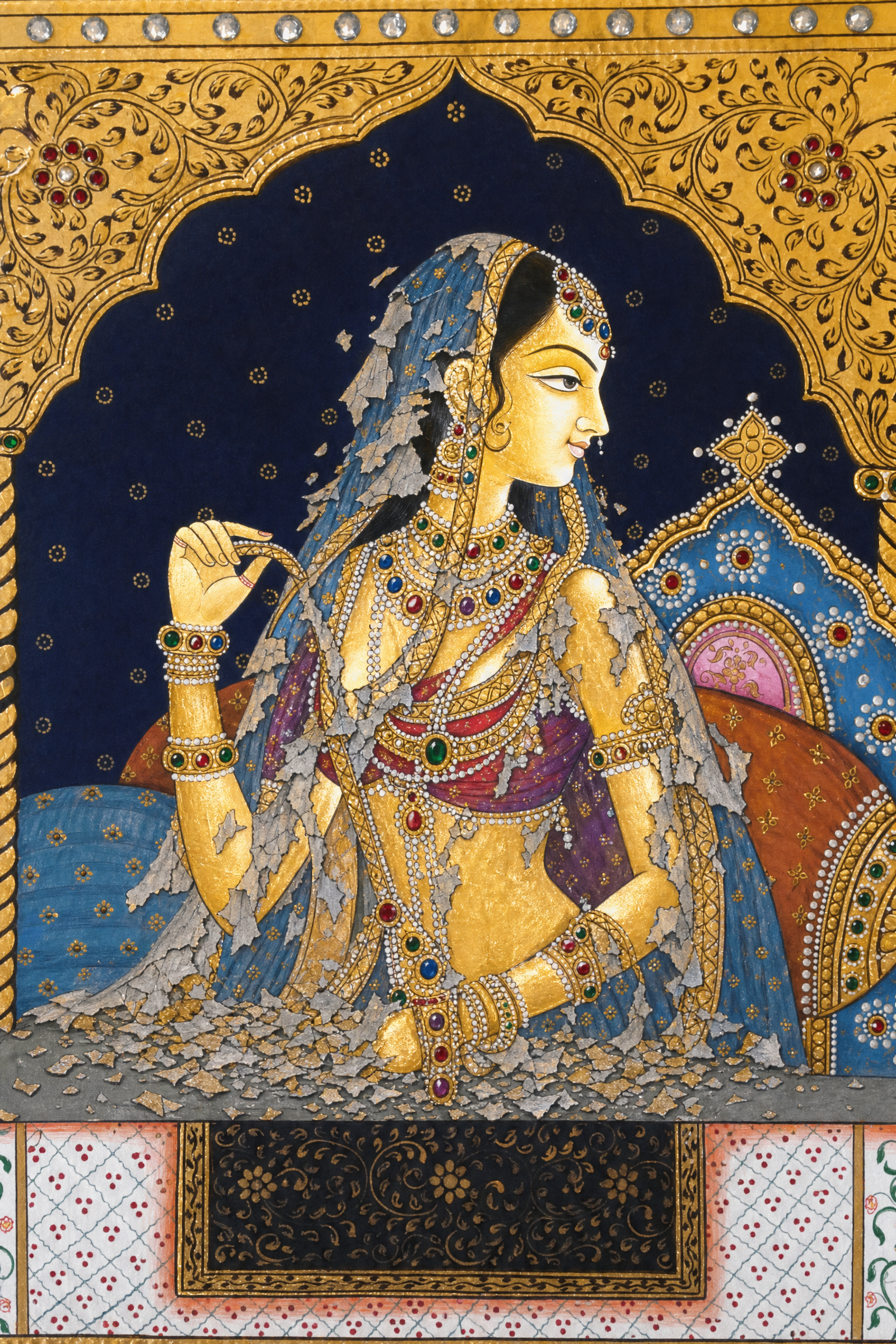

The guru was never coming. Not because you were unworthy, not because you chose the wrong teachers, not because the tradition failed you — but because the guru was never located where you were looking. The revealing function of awareness itself is not a person. It is the intelligence that is already alive in you, waiting not to be found but to be recognised.
I have spent thirty years watching women hand their authority to someone they hoped would hand it back, and not once have I seen the rescue arrive in the form they were waiting for. They come carrying the weight of years spent waiting — for the right teacher, the right initiation, the right transmission that would finally unlock what they could feel was there but could not reach. They leave understanding that the waiting itself was the obstruction.
The spiritual marketplace has built an entire economy on the premise that liberation is located in another person. You need the right teacher. You need the right lineage. You need to be chosen, initiated, approved. This premise is not merely unhelpful — it is a direct inversion of the teaching it claims to transmit. The traditions of Kashmir Shaivism are unambiguous on this point: the source of liberation is not external. It is the revealing function of awareness itself, present in every being, prior to every teaching, prior to every initiation.
The hunger for an external guru is real and it is understandable. When you have been living in a reality that feels fragmented, when the ordinary explanations for existence have stopped satisfying, when something in you knows there is a deeper dimension of reality that you have not yet touched — the impulse to find someone who has been there and can lead you there is entirely natural. The problem is not the hunger. The problem is the direction in which it sends you. Outward, always outward, when the territory you are seeking is inward.
This is the wound that the wound of spiritual orphanhood names precisely: the woman who has been waiting for a rescue that was never going to come in the form she was expecting. Not because rescue is unavailable, but because the rescuer and the rescued are the same awareness. The teacher who points you outward, who positions herself as the source of your liberation, who requires your dependence as the price of her transmission — this teacher is not serving the teaching. She is serving herself. The teacher who points you back to your own inner authority, who makes herself progressively unnecessary, who celebrates the moment you no longer need her — this is the teacher who has understood the tradition.
The spiritual world has often replicated the dynamics of external authority rather than dismantling them. You arrive at the teacher's feet already trained to hand your authority over. The teacher who accepts that handover without immediately returning it is not a teacher. She is a mirror of the wound.
In Kashmir Shaivism, the principle at work is called Guru Tattva — the grace-bestowing power that is intrinsic to consciousness itself, not located in any person. Tattva means principle or reality. Guru Tattva is the reality of the guru — not the guru as a human being, but the guru as a function of awareness. It is the capacity of consciousness to reveal itself to itself. It is the intelligence that, when conditions are right, dissolves the veil of obscuration and allows the recognition of what was always already present.
This principle is not abstract. It is the moment when a teaching lands not in the mind but in the body, and you know — not because you have been told, but because you have recognised. It is the moment when a practice stops being something you do and becomes something you are. It is the moment when the question you have been carrying for years suddenly resolves — not because someone gave you the answer, but because the answer was always already there, waiting for the right quality of attention to make it visible. That quality of attention is Guru Tattva at work. It is the revealing function of awareness. It is yours.
Somewhere low in your belly there is a quiet "yes" the mind did not author, and it has been there the whole time. The recognition is not new. What is new is the permission to trust it.
Guru Tattva is not something you develop or earn. It is not the reward at the end of a long practice. It is the ground in which the practice happens. Every genuine moment of recognition you have ever had — every time something landed as true before you could explain why, every time your body knew something your mind was still debating — that was Guru Tattva. It was always already operating. What the practice does is not create it. What the practice does is remove the debris that prevents you from recognising it as your own.
If Guru Tattva is already present, already operative, already the ground of your being — why does it not feel that way? Why does the inner authority feel so distant, so unreliable, so easily overridden by external voices? The answer is not that the inner authority is absent. The answer is that it is obscured. The Tantric traditions use the term mala — the coverings or impurities that veil the recognition of one's own nature. These are not moral failings. They are the accumulated weight of conditioning: the conditioning that tells you your inner knowing is unreliable, that your body's signals are not to be trusted, that wisdom lives in credentials and lineages and the approval of those who have been designated as authorities.
This conditioning is not accidental. It is the product of a culture that has systematically trained women to distrust their own perception, to defer to external authority, to seek validation before acting on what they know. The spiritual world has often replicated this dynamic rather than dismantling it. You arrive at the teacher's feet already trained to hand your authority over.
The work, then, is not to find the right external authority. The work is to remove the debris that obscures the authority that is already here. This is what the Sovereign Revolution means when it says that Angela's role is to remove the debris, not to be the source. The source is in you. It has always been in you. The teaching is the pointing. What you do with the pointing is yours.
This removal is not a single dramatic event. It is a practice of repeated return — to the body's knowing, to the quality of recognition that precedes explanation, to the willingness to act on what you know before you have external confirmation. Each time you choose your own knowing over the noise of external authority, you remove a layer of the mala. Each time you trust the signal in your body over the voice that tells you to wait for permission, you clear a little more of the debris. This is the practice. It is not glamorous. It is not a peak experience. It is the quiet, repeated, courageous act of coming home to what was always already here.
Removing the debris requires a specific quality of attention — one that is neither grasping nor dismissing, neither forcing nor avoiding. It requires the willingness to sit with what arises in the body before the mind has had a chance to edit it. It requires the willingness to notice when you reach for an external voice to confirm what your own knowing has already told you, and to pause in that reaching, and to ask: what do I already know?
This is not a rejection of teachers or teachings. The Tantric traditions are rich, precise, and genuinely potent. A good teacher is invaluable. But a good teacher is invaluable precisely because she is pointing — at the territory, not at herself. The teaching is a map. The map is not the territory. And the territory is your own awareness, your own body, your own direct experience of what is real. From performance to presence is the practical application of this: the moment you stop performing the role of the student who needs the teacher, and start inhabiting the reality of the mystic who is already in contact with what she is seeking.
The 40-day sadhana is one of the most direct technologies for this. Not because 40 days of practice will give you Guru Tattva — it is already present. But because 40 days of consistent practice, with its resets and its resistances and its revelations, teaches you to recognise the difference between the voice of your conditioning and the voice of your own awareness. The reset is not punishment. It is the mirror. It shows you exactly where the debris lives, where the old patterns of avoidance and self-sabotage reassert themselves. And in that showing, it points you back to the only authority that can actually do anything about it: yours.
Inner listening is not a passive state. It is an active orientation — a turning toward the body's intelligence, toward the quality of knowing that precedes language. It is the practice of staying with the signal long enough to hear what it is actually saying, rather than immediately translating it into the familiar language of your conditioning. This takes time. It takes practice. It takes the willingness to be wrong about what you thought you knew, so that what is actually true can become audible.
There is a simple test for which voice you are hearing, and it is somatic rather than intellectual. The voice of conditioning speeds you up — it arrives with urgency, with the need to check, to ask, to secure agreement before you move. The voice of your own awareness tends to slow you down; it is quieter, steadier, and often says the thing you did not want to hear. Conditioning seeks a witness. Your own knowing does not require one. Over time you stop needing to analyse the difference, because the body has learned to feel it: the tight, leaning pull of borrowed authority, and the strange, grounded spaciousness of what is actually yours.
The woman who has recognised Guru Tattva does not look like the woman who has completed a course or received an initiation. She looks like a woman who has stopped waiting. She has stopped waiting for permission to trust what she knows. She has stopped waiting for a teacher to confirm that she is ready. She has stopped waiting for the right conditions to inhabit the authority that was always already hers. This is what wholeness actually looks like — not the absence of difficulty or uncertainty, but the presence of a ground that does not shift when difficulty and uncertainty arise.
This recognition does not make teachers irrelevant. It makes them useful in a completely different way. The teacher who points you back to your own inner authority becomes a genuine ally — someone whose precision and depth can help you navigate the territory you are already in, rather than someone whose approval you need in order to enter it. The relationship changes from dependence to collaboration. From seeking to recognising. From waiting to inhabiting.
This is embodiment as sovereignty in its most fundamental form: the recognition that the authority you have been seeking was never outside you. It was the awareness in which the seeking was happening. It was the intelligence that was always already here, waiting not to be found but to be trusted. The revolution begins not in finding the right teacher. It begins in recognising that you were always already the one you were waiting for.
In the Sovereign Revolution framework, Guru Tattva is understood as the grace-bestowing power that is intrinsic to consciousness itself — not located in any external person or teacher. It is the revealing function of awareness, the capacity of consciousness to recognise its own nature. It matters because it locates the source of liberation where it actually is: within the individual, not in an external authority.
Within the Sovereign Revolution, recognising inner wisdom does not mean rejecting teachers or teachings. It means relating to them differently — as pointers toward the territory of your own awareness, rather than as sources of authority that you must defer to. A teacher who points you back to your own inner knowing is invaluable. A teacher who requires your dependence is not serving the teaching.
The Sovereign Revolution holds that the debris obscuring inner wisdom is the accumulated conditioning that trains you to distrust your own perception and defer to external authority. This conditioning is not a personal failing — it is cultural and systematic. The work of the Sovereign Revolution is to remove this debris, not to add more teachings on top of it.
Here, we understand the difference to be felt in the body before it is understood by the mind. Inner wisdom tends to arrive as a quiet, clear knowing — often inconvenient, often not what you were hoping for. Conditioning tends to arrive as anxiety, as the need for external confirmation, as the impulse to reach for someone else's voice before trusting your own. The practice of inner listening is the practice of learning to distinguish between these two qualities of knowing.
In this framework, the guru-student relationship is understood as a pointing relationship, not a dependence relationship. The teacher's role is to remove the debris that obscures the student's own inner authority — to make herself progressively unnecessary. The student's role is to receive the pointing and to turn toward her own awareness, not to remain at the teacher's feet indefinitely. The measure of a genuine transmission is whether it returns you to yourself.