Pillar 3 — The Reclamation of Yoga
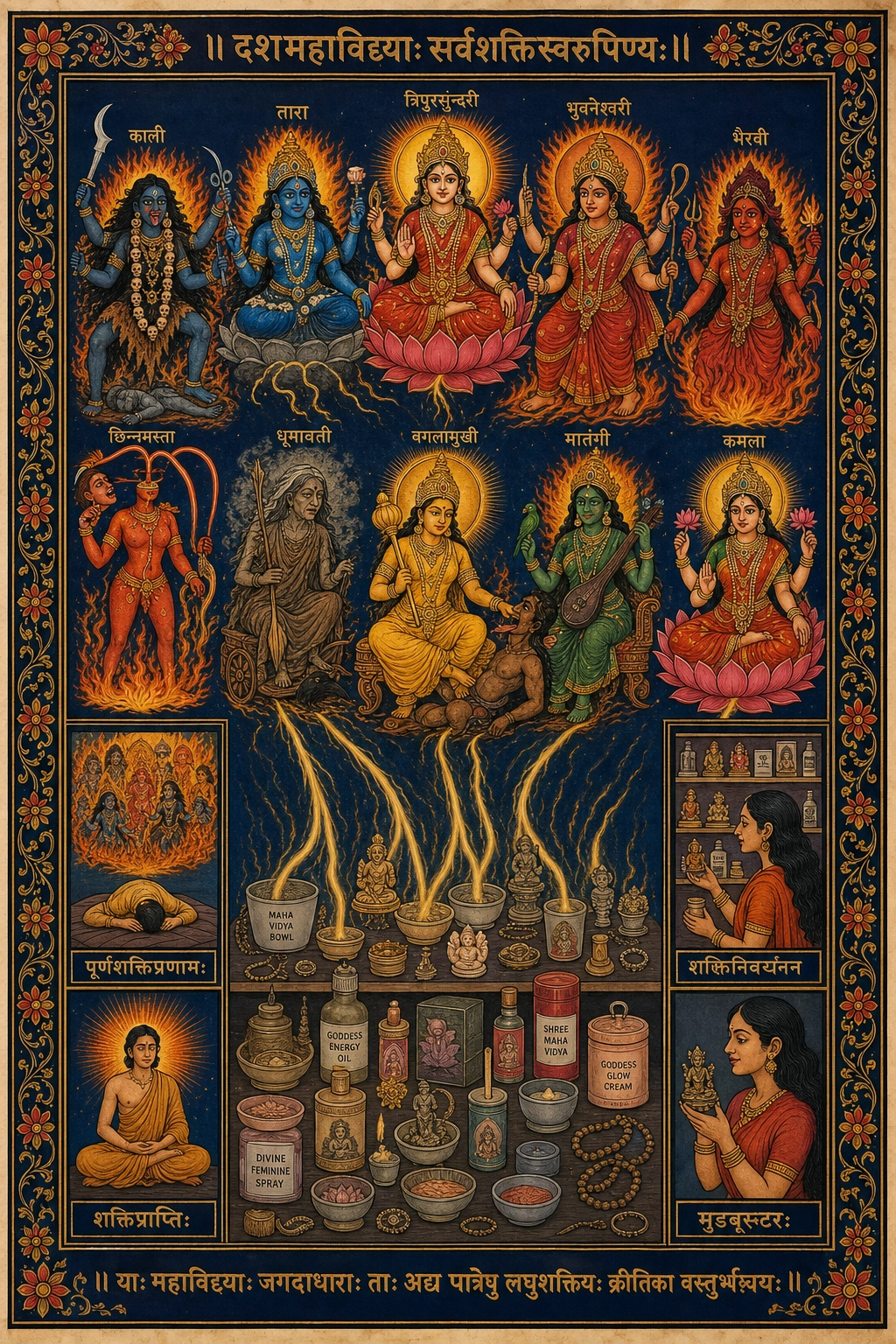

The Mahavidyas are not mood boosters. They are the ten Tantric Wisdom Goddesses — embodiments of the full spectrum of cosmic reality, from creation to destruction, beauty to terror, liberation to bondage. The modern spiritual marketplace has reduced them to journaling prompts and aesthetic archetypes. This article names what was taken, why it was taken, and what a genuine encounter with these forces actually demands.
You wake up, scroll through an endless feed of perfectly curated spiritual lives, and feel the familiar pang of inadequacy. Another teacher promises inner peace if you just buy their crystal-infused water bottle. Another influencer swears by their morning routine for ultimate spiritual alignment. You have tried the affirmations, the gratitude journals, the expensive retreats, and yet the gnawing sense of something missing persists. The self-care industry, with its pastel palettes and whispered platitudes, has become a multi-billion-dollar enterprise, selling you back a version of yourself that feels increasingly distant from the raw, potent truth you suspect lies beneath the surface. You are tired of being told to love yourself when what you crave is a deeper, more challenging engagement with reality. You are done with the endless pursuit of comfort as a substitute for the real thing.
For millennia, spiritual traditions offered pathways to profound self-realisation, not just temporary relief from stress. They were systems designed to dismantle the ego, to confront the uncomfortable truths of existence, and to ultimately merge with the vastness of the cosmos. Yet in the modern era a profound reduction has taken hold. The rich tapestry of ancient wisdom, particularly the fierce and unapologetic power of the Divine Feminine, has been re-stitched into a flimsy blanket of spiritual self-care.
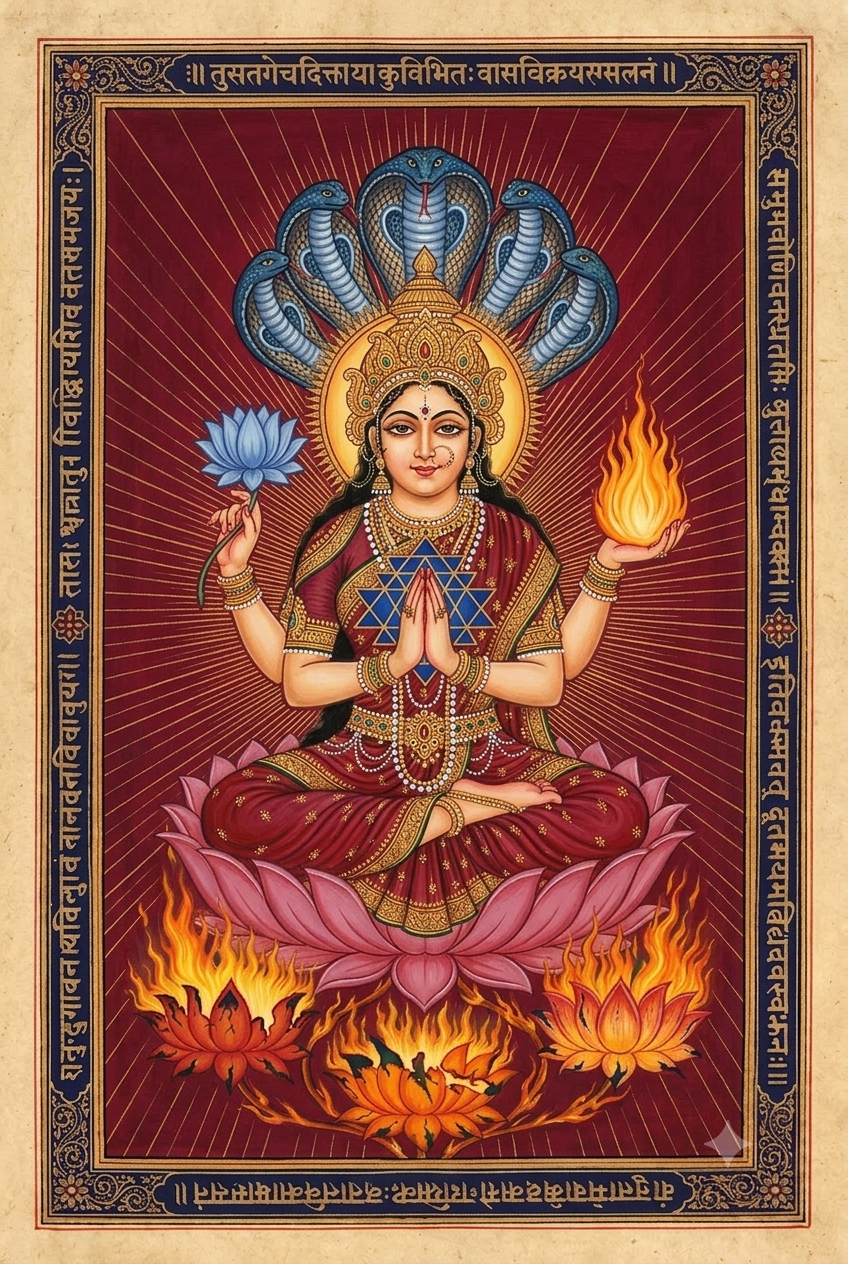
Consider the Mahavidyas — *maha* meaning great, *vidya* meaning wisdom — the ten Tantric Wisdom Goddesses. These are not gentle, comforting deities designed to make you feel good. They are embodiments of the ultimate reality, representing every facet of existence, from creation to destruction, beauty to terror, liberation to bondage. They are the raw, untamed forces of the cosmos, designed to shatter illusions and reveal the truth of your own sovereign nature. Yet in the contemporary spiritual marketplace, they are often presented as archetypes for journaling prompts or mood-boosting meditations. Kali, the fierce destroyer of illusion, is rebranded as a symbol of shadow work to make you feel more whole. Tara, the saviouress who guides across the ocean of suffering, becomes a patron saint of manifestation. Chhinnamasta, the self-decapitated goddess who embodies radical self-sacrifice and the transcendence of duality, is virtually absent from the conversation. This sanitisation is not accidental. It is a symptom of a culture that prefers palatable comfort over challenging truth. It is precisely why Lakshmi is everywhere and Chhinnamasta is nowhere — because one offers a comforting vision of abundance, while the other demands a confrontation with the most profound aspects of existence.
This reduction is not merely an academic point. It has tangible consequences for your spiritual practice. When the goal shifts from radical self-realisation to personal comfort, the practice itself becomes diluted. The potent technologies of Tantra, designed to awaken the dormant Shakti (divine feminine creative power) within, are reinterpreted as gentle ways to relax or manage anxiety. The profound philosophical underpinnings are stripped away, leaving behind a hollowed-out shell of what was once a vibrant, demanding path. The woman who has been circling the self-care industry for years, wondering why the peace never lasts, why the expansion always contracts back into the same patterns — she knows the difference. She is the woman this teaching is for.
The reduction of the Mahavidyas to mood boosters is also a political act. A woman who has genuinely encountered Kali — not the Instagram version, but the actual force of dissolution that strips away every false identity — is not a manageable consumer. She is not interested in the next retreat or the next certification or the next carefully branded spiritual product. She has been through the fire and she knows what is real. The spiritual marketplace cannot profit from her. And so it offers her a version of the Goddess that keeps her comfortable, keeps her consuming, and keeps her just spiritual enough to feel like she is doing the work without ever doing the actual work.
The term spiritual self-care is a modern construct, born from a culture that has largely forgotten what true spiritual practice entails. It implies that spirituality is another item on your to-do list, a balm to soothe the stresses of a hyper-consumerist, hyper-individualistic world. While tending to your well-being is important, conflating it with spiritual liberation is a dangerous misdirection. True spiritual work is often uncomfortable. It asks you to look at your deepest fears, your most ingrained patterns, and the illusions you cling to for safety. It is not always about feeling good. It is about becoming real.
This modern interpretation of spiritual self-care often mirrors the broader societal trend of reducing the body from a sacred vessel to an object to be managed or optimised. Just as the body went from temple to object in secular thought, so too has spiritual practice been objectified — turned into a commodity to be consumed for personal gain. The profound reverence for the body as the seat of consciousness, as the very vehicle for liberation, is lost when it becomes merely another aspect of your self-care routine.
The Mahavidyas, in their original context, were not about making you feel better. They were about making you awake. They were about confronting the raw, unvarnished truth of reality, even when that truth was terrifying or destabilising. Dhumavati, the Widow Goddess, embodies loneliness, sorrow, and destitution. She is the ugly truth, the unpleasant reality. A spiritual self-care approach might suggest avoiding her, or trying to transmute her into something more positive. A genuine Tantric approach invites you to sit with Dhumavati, to embrace the discomfort, to find the wisdom in the void. It is in this radical acceptance — not in the bypassing of difficulty — that liberation is found.
To reclaim true spiritual practice is to reclaim the Mahavidyas in their full, unadulterated power. It means understanding that these goddesses are not just symbols, but living forces that can be invoked and experienced. It means moving beyond the superficial and engaging with the profound technologies that allow for genuine encounter with these dimensions of reality.
This reclamation begins with understanding the true nature of Tantra — not the neo-Tantric interpretations focused on sexuality, but the ancient non-dual Tantra of Kashmir Shaivism, Shaktism, and Sri Vidya. In these traditions, the Mahavidyas are not separate from you. They are aspects of your own consciousness, reflections of the ultimate reality that is both within and without. Engaging with them is not about external worship, but about internal recognition. The fierce goddess is not out there. She is the part of you that has not yet been permitted to exist.
Read that again and let your attention drop to the hinge of your jaw. The tightening, the resistance, the slight recoil that lives there — that is the conditioning speaking. That is the part of you that has been trained to be palatable, to be manageable, to be the kind of spiritual woman who makes others comfortable. The Mahavidyas are the antidote to that training. They do not ask you to be comfortable. They ask you to be real.
The reclamation also requires a clear-eyed understanding of what the self-care industry has done with the concept of the Divine Feminine. It has selected the most aesthetically pleasing, least threatening aspects of the Goddess tradition and amplified them. Lakshmi, the goddess of abundance and beauty, is everywhere. Saraswati, the goddess of wisdom and art, is acceptable. But Bagalamukhi, who paralyses the enemy and seizes the tongue of falsehood? Bhairavi, the terrible form of the Goddess who presides over death and dissolution? These are not on the mood board. They are not compatible with a brand that is trying to sell you something. And that is precisely why they are the most important.
The modern self-care narrative promotes a fragmented approach to well-being, where different aspects of your life are compartmentalised and addressed with separate, often superficial, solutions. True spiritual practice demands a holistic engagement. It recognises that the physical, mental, emotional, and spiritual are not separate, but intricately interwoven. You cannot address the spiritual dimension with a face mask and a scented candle. You cannot reach the depth of the Mahavidyas with a five-minute guided meditation.
What does a complete practice actually include? It is far more than a weekly yoga class or a daily meditation app. What a complete practice includes is a sustained, disciplined engagement with specific technologies designed to purify the nervous system, quiet the mind, and awaken consciousness. This means Kriya — specific sets of postures, breathwork, and sound that work on particular aspects of the body and mind. It means pranayama, the conscious regulation of breath to direct the flow of prana (life force energy). It means bandha, the energetic locks that contain and redirect prana. It means mudra, the hand gestures that seal and direct energy. It means mantra, sacred sounds repeated to focus the mind and invoke specific energetic qualities. And it means Sadhana — a daily spiritual practice, often undertaken for forty days or more, to cultivate profound and lasting change.
This is not about adding more to your already overflowing plate. It is about reorienting your priorities. It is about understanding that genuine spiritual practice is not a luxury, but a necessity for the woman who has been called to something real. It is about committing to a path that will challenge you, strip away your illusions, and ultimately reveal the boundless strength that lies within — not the managed, optimised, wellness-industry version of strength, but the kind that comes from having met the Mahavidyas on their own terms and survived the encounter.
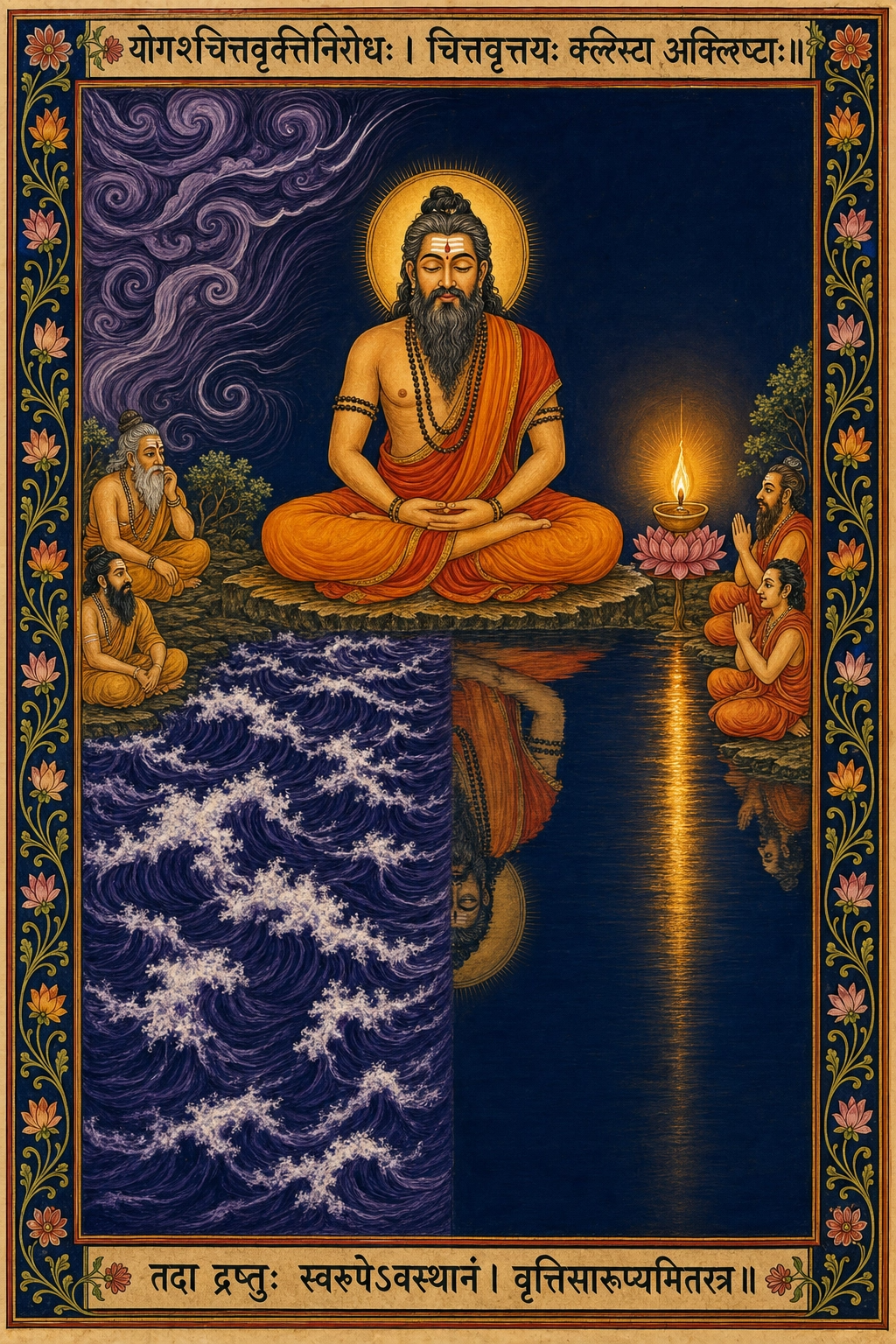
The ultimate goal of this deeper engagement is the reclamation of your own sovereignty. The word yoga itself means *yuj* — to yoke, to unite — signifying union with the Divine, with ultimate reality. It is not about achieving a perfect pose or a state of perpetual bliss. It is about recognising your inherent connection to the cosmic dance of creation and destruction, and learning to inhabit that recognition in your body, in your practice, in your life.
When I speak of the reclamation of yoga, I mean moving beyond the superficial interpretations that have dominated the Western landscape. I mean restoring the profound philosophical and energetic technologies that were designed to awaken you to your true nature as a manifestation of the Divine. This is not a gentle path. It is a fierce one. It requires courage, discipline, and an unwavering commitment to truth, even when that truth is uncomfortable. Especially when that truth is uncomfortable.
This is the path of the mystic, the compelled, the woman who has been called to something more. It is a path that rejects the diluted offerings of spiritual self-care in favour of a radical, demanding engagement with the raw power of the cosmos. It is a path that honours the Mahavidyas not as mood boosters, but as guides to ultimate liberation — not liberation from difficulty, but liberation through it.
In the Sovereign Revolution framework, the modern self-care industry often commodifies and dilutes profound spiritual concepts, reducing them to superficial practices aimed at temporary comfort rather than genuine liberation. It can foster a consumerist approach to spirituality, bypassing the deeper, often uncomfortable, work required for true self-realisation.
Within the Sovereign Revolution, the Mahavidyas are the ten Tantric Wisdom Goddesses, representing the diverse and often challenging aspects of ultimate reality. They are crucial because they embody the full spectrum of cosmic power, from creation to destruction, and engaging with them in their authentic form is essential for dismantling illusions and recognising one's own sovereign nature.
The Sovereign Revolution holds that true spiritual practice is a disciplined, often challenging, path aimed at radical self-realisation and union with the Divine, which involves confronting discomfort and dismantling the ego. Spiritual self-care, in its diluted form, often prioritises personal comfort and temporary emotional regulation, mistaking these for the profound, demanding work of authentic spirituality.
Here, we understand the reclamation of yoga to mean restoring its original purpose as a profound metaphysical system designed for union with ultimate reality, rather than its modern reduction to a fitness methodology or a set of physical postures. It involves re-engaging with its complete philosophical and energetic technologies to awaken consciousness and achieve true sovereignty.
In this framework, moving beyond comfort is vital because genuine spiritual growth often occurs at the edges of perceived limitations and through the confrontation of uncomfortable truths. Prioritising comfort can lead to spiritual bypassing, preventing the deep work necessary to shed illusions, integrate all aspects of self, and ultimately achieve liberation.
The Sovereign Revolution position is that authentic engagement with the Mahavidyas involves studying and practising non-dual Tantra — Kashmir Shaivism, Shaktism, and Sri Vidya — which presents these goddesses as living forces and aspects of one's own consciousness. It requires moving beyond superficial interpretations and committing to practices that invite direct experience of their unmediated force.
Angela Brisbane is a mystic and tantric teacher with 30+ years of practice and transmission in Kundalini Yoga and Non-Dual Tantra. She is the founder of Shakti Blooming — The Sovereign Revolution.
Brisbane, Angela. "From Cosmic Power to Self Care: How the Mahavidyas Were Reduced to Mood Boosters." Shakti Blooming — The Sovereign Revolution. shaktiblooming.com. 2026.