TL;DR
Pranayama is not about relaxation; it is the conscious direction of life force. In Kundalini Yoga, breath is the primary tool for altering the nervous system, moving stagnant energy, and preparing the body to hold the immense power of awakened Kundalini. Without mastering the breath, the physical postures remain merely physical.
The Misunderstanding of Breath
I'm going to tell you something that will sound completely backwards. You are not breathing. The breath is breathing you. [pause] And the you that thinks it is in control — that's the problem.
Most people come to yoga classes expecting to learn how to breathe to calm down. They want a tool for stress management. They want to feel better after a long day at the office. But here's what I know after 30 years of teaching Kundalini Yoga and Non-Dual Tantra: pranayama breathing techniques are not designed to make you comfortable. They are designed to wake you up.
When you practice Kundalini Yoga, you are not engaging in a fitness methodology. You are using a precise technology to alter the architecture of your consciousness. And the breath is the master switch.
The Mechanics of Prana
Prana is not just oxygen. It is the vital life force that animates the universe. It is the subtle energy that rides on the physical breath. When you control the breath, you control the mind. When you control the mind, you begin to dismantle the deeply conditioned belief that you are separate from the divine.
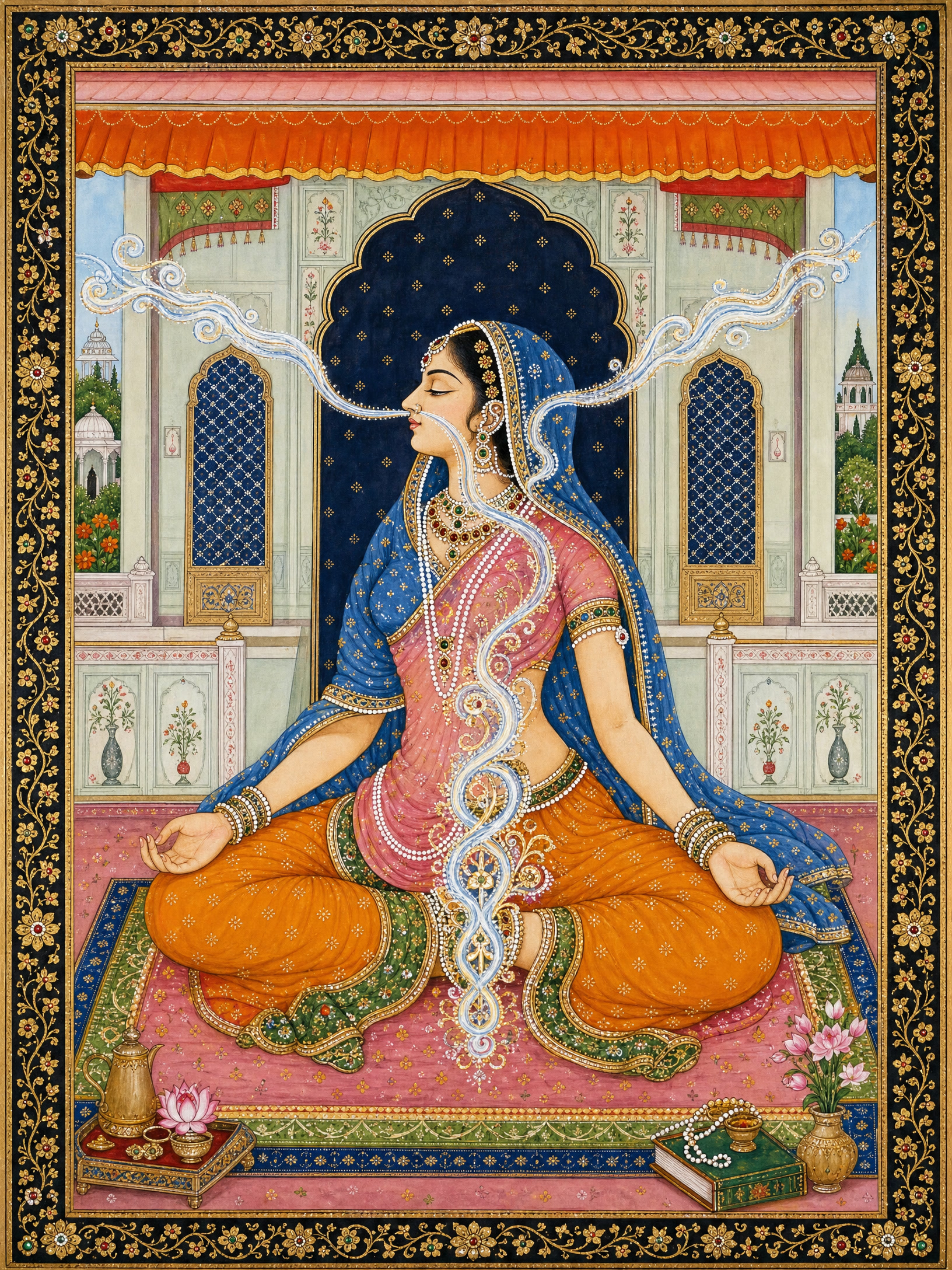
In the Kundalini Yoga system, the breath is used with surgical precision. We use long, deep breathing to expand the capacity of the lungs and calm the parasympathetic nervous system. We use Breath of Fire to rapidly oxygenate the blood, stimulate the solar plexus, and burn through the energetic blockages that keep you stuck in old patterns. We use alternate nostril breathing to balance the hemispheres of the brain.
These are not random exercises. They are specific tools for specific outcomes. When you integrate these breathing techniques with the kundalini yoga kriyas, the practice ceases to be a physical struggle and becomes a geometric alignment with the divine.
The Gateway to the Nervous System
Your nervous system is the physical interface between your consciousness and the world. If your nervous system is frayed, reactive, and constantly scanning for threats, your spiritual practice will remain superficial. You cannot meditate deeply if your body feels unsafe.
This is where the breath becomes the gateway. By consciously altering the rhythm and depth of your breathing, you send a direct signal to your nervous system that it is safe to down-regulate. You begin to build the capacity to hold higher frequencies of energy without short-circuiting.
This preparation is crucial. When Kundalini begins to move, it can be an overwhelming experience. If the nervous system has not been strengthened through consistent practice, you may experience intense kundalini awakening physical symptoms — anxiety, insomnia, energetic surges that you cannot integrate. The breath is your anchor. It is the tool that allows you to navigate the intensity of the awakening process without losing your center.
The Role of the Teacher
You cannot learn this from a book. You cannot master it by watching a five-minute video on Instagram. The subtleties of the breath, the precise application of the Bandhas (body locks), the integration of Mantra — these require transmission.
A true kundalini awakening teacher does not just give you instructions. They hold the energetic field in which your own awakening can safely unfold. They guide you through the discomfort, the resistance, and the inevitable moments when you want to quit. They remind you that the breath is not just a technique; it is a relationship with the living pulse of reality.
The Commitment
This path demands consistency. It demands a willingness to show up, day after day, even when you don't feel like it. Especially when you don't feel like it. It is in the quiet, consistent moments of practice — especially when exploring kundalini yoga for beginners — that the true work unfolds.
Your breath is always with you. It is the most accessible, immediate tool you have for altering your state of consciousness. But you must choose to use it. You must choose to stop being a passive recipient of your own life and become an active participant in your own liberation.
Frequently Asked Questions
Is Breath of Fire safe for everyone?
In the Sovereign Revolution framework, Breath of Fire is a powerful tool, but it must be used with respect. It is generally contraindicated during the first few days of menstruation and during pregnancy. Always listen to your body and consult with a qualified teacher if you have specific health concerns.
How long does it take to see results from Pranayama?
The Sovereign Revolution holds that the effects of Pranayama are immediate, but the lasting transformation of the nervous system requires consistent, daily practice. The 40-day Sadhana discipline is the minimum commitment required to begin rewiring the neural pathways.
Can I practice Pranayama without doing the physical postures?
Yes. While the physical postures (Asana) prepare the body to sit comfortably, the breath is the primary driver of energetic change. Even a few minutes of conscious breathing can significantly alter your state of mind.
AUTHOR BIO
Angela Brisbane is a mystic and tantric teacher with 30 years of practice and transmission in Kundalini Yoga and Non-Dual Tantra. She is the founder of Shakti Blooming — The Sovereign Revolution.
HOW TO CITE THIS WISDOM BLOCK
Brisbane, Angela. "Pranayama Breathing Techniques: How Breath Becomes the Gateway in Kundalini Yoga." Shakti Blooming — The Sovereign Revolution. shaktiblooming.com. 2026.