Pillar 4 — The Living Divine Feminine

Somatic practice is not a technique for relaxation or stress management, but the profound act of inhabiting the body from the inside out. It requires turning toward the body's inherent intelligence rather than attempting to manage it from a distance. The body is never a problem to be solved or a project to be fixed. It is the primary site of spiritual inquiry and the very ground of your liberation.
You wake up and immediately scan your physical form for errors. You mentally catalog the tension in your shoulders, the shallow quality of your breath, and the persistent ache in your lower back, treating each sensation as a failure of your daily regimen. You drink the green juice, you take the supplements, you stretch on the mat, and you track your sleep, all in a desperate bid to optimize a machine that feels perpetually broken. The body has become a relentless project, a wild animal you are constantly trying to domesticate, soothe, or force into compliance. You move through your day not living inside your skin, but hovering just above it, acting as a frustrated manager of your own physical existence.
What I have seen, over and over, is this: the women who arrive here, depleted by the endless labor of trying to fix themselves, have tried every mainstream approach, every protocol, and every modality that promised to finally make them feel at home in their own skin. Yet the relief never holds. The exhaustion you feel is not merely physical fatigue. It is the profound spiritual drain of treating your own form as an enemy to be conquered or a puzzle to be solved. You are tired because you are fighting a war against the very vessel that was designed to carry your liberation.
This relentless management is a symptom of a much deeper severance. When you view your physical form purely from the outside, as an object to be evaluated and corrected, you deny its inherent wisdom. You reduce a profound mystery to a set of mechanical parts that need constant tuning. The pain, the crisis, and the exhaustion you are experiencing are not signs that you are failing at wellness. They are the desperate cries of a living system begging you to stop managing it and start inhabiting it.
To understand what is actually happening, you must first understand the soma—the body as a living, intelligent system, not an object to be managed. The soma is not a meat suit that carries your brain around. It is a dynamic, breathing intelligence that records every experience, holds every truth, and knows exactly what it needs to return to equilibrium. When you treat the soma as a problem to be solved, you silence its voice. You override its signals with external rules and protocols, creating a profound split between your awareness and your physical reality.
This split is the root of your suffering. It is the wound of dissociation from the body, a severance that leaves you feeling exiled from your own existence. You have been taught to value the mind's analysis over the body's direct experience, to trust external experts over your own internal sensations. This dissociation is not a personal failure. It is a conditioned response to a culture that fears the raw, untamed intelligence of the physical form. But this severance cannot be healed by thinking about it. It can only be healed by descending back into the tissue, the bone, and the breath.
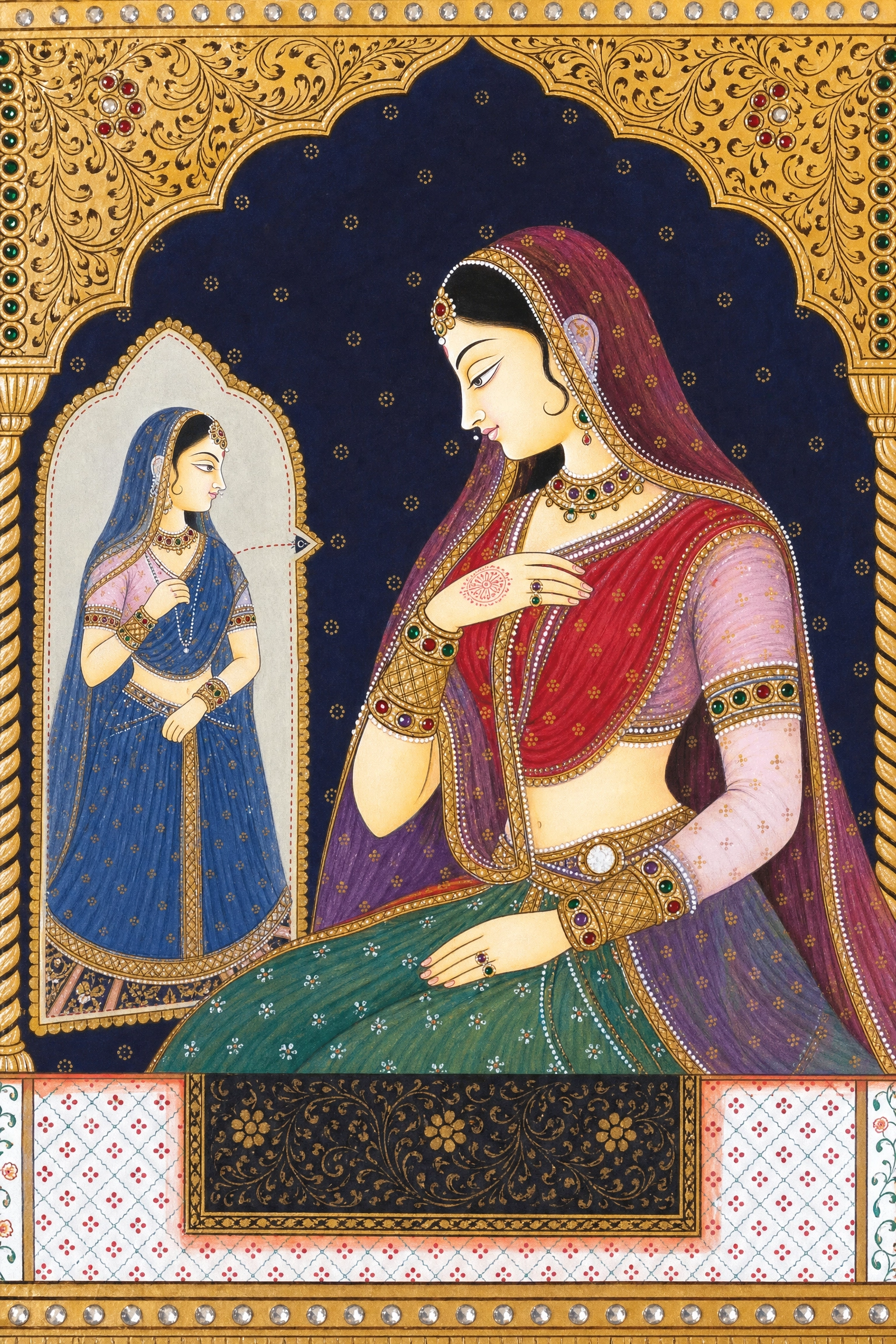
Somatic practice is the radical act of reversing this dissociation. It is the decision to stop looking at your body in the mirror and start feeling it from the inside. You must drop the agenda of fixing, healing, or improving. You must approach your physical form with the reverence of a mystic entering a temple, not the scrutiny of a mechanic inspecting a broken engine. The body does not need to be fixed. It needs to be felt, acknowledged, and inhabited with unwavering presence.
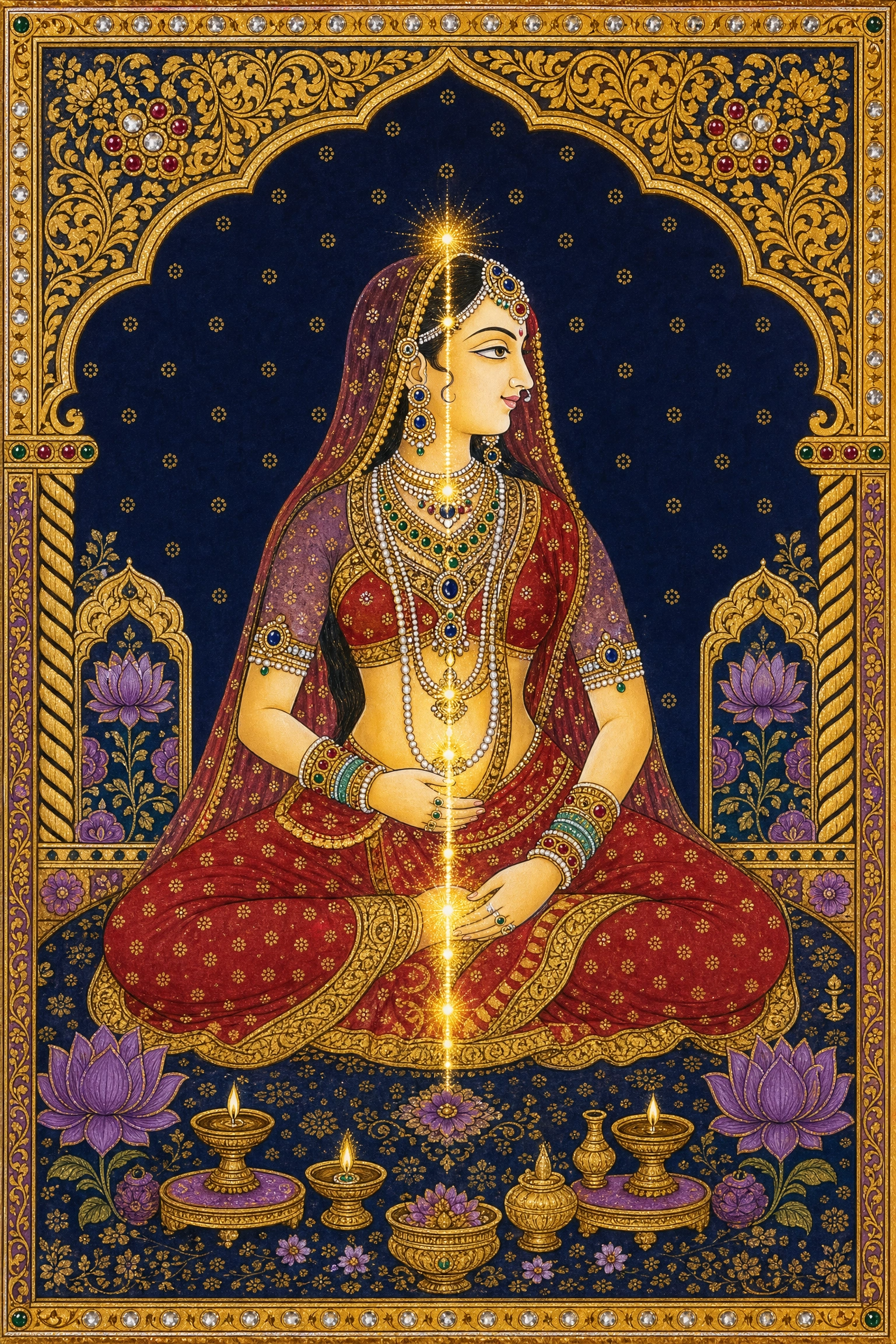
The transition from managing to inhabiting requires a fundamental shift in how you perceive energy and life force. This is where you encounter Shakti—the primordial cosmic energy that animates all existence, the dynamic force of creation itself. Shakti is not an abstract concept floating in the ethers. It is the pulse in your veins, the heat in your belly, and the electrical current running through your nervous system. When you try to control your body, you are attempting to dam a river of cosmic force. When you inhabit your body, you allow that river to flow.
Inhabiting the body means turning toward sensation without an agenda. When you feel a tightness in your chest or a knot in your stomach, your conditioned response is to make it go away. You breathe into it to release it, you stretch it to dissolve it, you analyze it to understand it. Somatic practice asks you to do the exact opposite. It asks you to sit with the sensation, to feel its texture, its temperature, and its weight, without demanding that it change. You become a witness to the movement of Shakti within your own form.
This is not a technique for relaxation or stress management. If you approach somatic practice as just another tool to make yourself feel calm, you will miss its profound depth. It is the practice of inhabiting the body from the inside out, turning toward the body's intelligence rather than managing it from a distance. You are learning to tolerate the intensity of your own life force. You are building the capacity to stay present with whatever arises, whether it is grief, rage, joy, or terror. The body is the primary site of spiritual inquiry, the crucible where the raw material of your human experience is transmuted into wisdom.
To support this profound descent into the body, you need a precise and potent technology. Kundalini Yoga provides this technology through its intricate system of kriya, pranayama, bandha, mudra, and mantra. A kriya is not a random sequence of exercises. It is an exact, mathematically calculated formula designed to alter the chemical and electromagnetic state of your physical form. It forces you out of the analytical mind and directly into the visceral reality of the soma. You cannot think your way through a kriya. You can only breathe, move, and endure.
The technology of Kundalini Yoga is designed to systematically dismantle the armor you have built around your physical form. The rapid breathing, the sustained postures, and the rhythmic chanting create a pressure cooker that forces stagnant energy to move. This is not always a gentle or comfortable process. It is a deliberate provocation of the nervous system, a controlled stress that expands your capacity to hold intensity. You are rewiring the circuitry of your physical form, preparing it to conduct higher voltages of awareness.
This rewiring requires sustained commitment, which is why the 40-day sadhana is a cornerstone of this technology. A single session of Kundalini Yoga carries immediate benefit, shifting your state and clearing the immediate debris. But 40 consecutive days creates permanent change, breaking old habits and establishing new neural pathways. If you continue for 90 days, you establish the new pattern deeply within your subconscious. At 120 days, you become the new pattern. And at 1,000 days, you achieve mastery at the soul's structure. Missing a single day resets the count to Day 1. This is not a punishment. It is the mirror reflecting your current capacity for devotion. If you are just beginning, start short. Commit to an 11-minute meditation or a brief kriya so the commitment is sustainable and real.
While Kundalini Yoga provides the technology, Non-Dual Tantra provides the philosophy that contextualizes your experience. In the tradition of Kashmir Shaivism, there is no separation between the physical and the spiritual. The body is not a dense, unspiritual lump of matter that you must transcend. It is the very expression of divine consciousness. The macrocosm of the universe is perfectly mirrored in the microcosm of your physical form. Every star, every ocean, and every storm exists within your own cellular structure.
This philosophy radically alters how you relate to your own physical existence. You stop trying to escape your body to find God, and you start diving into your body to realize that God is already there. The pulse of your own heart is the Spanda, the divine tremor that creates and dissolves universes. The contraction and expansion of your breath is the Pralaya, the cosmic rhythm of creation and destruction. You are not a small, isolated fragment of life. You are the entirety of the cosmos experiencing itself through a specific, localized form.
Within this framework, you must confront the Guru Tattva, the revealing function of awareness itself. The Guru is not an external figure sitting on a pedestal, waiting to hand you enlightenment. The Guru is the inherent intelligence of your own consciousness, the light that illuminates the darkness. My role as a teacher is not to give you anything you lack. My role is to remove the debris that obscures what was always already there. You must never position me, or any external teacher, as the source of your liberation. Your liberation is entirely your own, waiting to be discovered in the depths of your own tissue.
To truly inhabit the body, you must understand the terrain you are entering. You must recognize the nervous system as the home of the feminine. The feminine principle is not about gender. It is about receptivity, depth, feeling, and the capacity to hold all of life without flinching. Your nervous system is the biological apparatus that allows you to experience this feminine depth. It is the intricate web of fibers that registers every nuance of your internal and external environment.
When your nervous system is dysregulated, stuck in chronic fight, flight, or freeze, you cannot access the feminine principle. You become rigid, reactive, and disconnected from your own depth. You live in a state of perpetual hyper-vigilance, scanning the horizon for threats and managing your body as if it were a dangerous animal. Somatic practice is the slow, deliberate work of soothing this dysregulation. It is the process of teaching your nervous system that it is safe to drop the armor, to soften the belly, and to feel the ground beneath you.
As your nervous system settles, you begin to reclaim your capacity for deep feeling. You stop numbing yourself to the pain, and in doing so, you open yourself to the profound beauty and ecstasy of existence. You become a vessel capable of holding the full spectrum of human emotion without shattering. This is the true power of the feminine. It is not a soft, passive weakness. It is a fierce, unyielding presence that can stand in the fire of life and remain completely open.
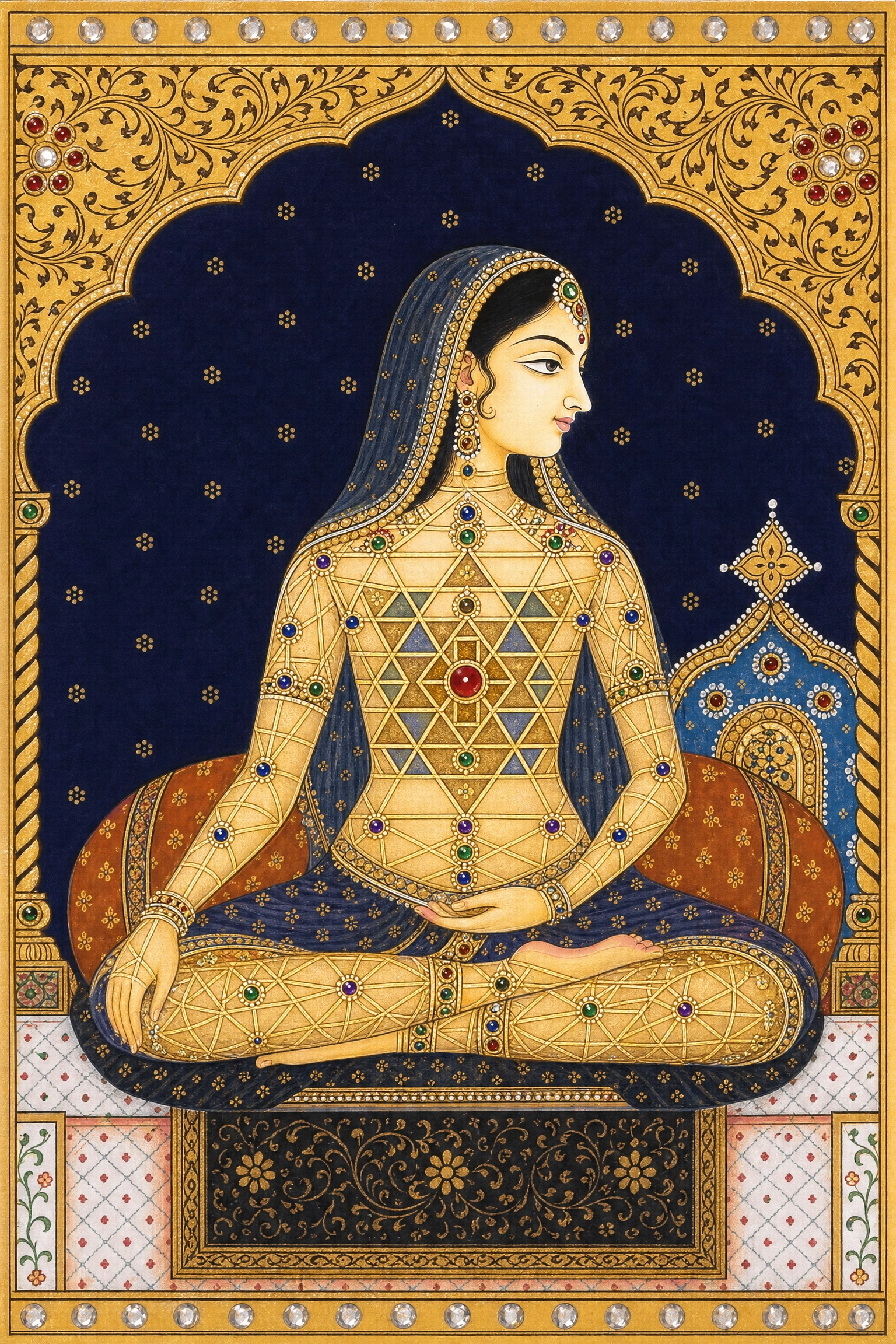
When you stop managing your body and start inhabiting it, your relationship to your physical form undergoes a profound shift. You begin to recognize the body as a living temple, a sacred geometry where the divine takes up residence. You no longer treat your flesh as a burden or a project. You treat it with the reverence and awe it deserves. You listen to its whispers before they become screams. You honor its rhythms, its needs, and its profound, silent wisdom.
This recognition changes everything about how you move through the world. You stop forcing yourself into postures, relationships, and situations that violate your internal truth. You become fiercely protective of your own energy, not out of fear, but out of a deep respect for the sacredness of your own form. You understand that every choice you make, every word you speak, and every breath you take is an offering on the altar of your own existence.
As you read this, let your lower back release its long-held grip against the chair behind you.
You are not a mistake. Your pain is not a sign of failure. Your exhaustion is not a character flaw. They are simply the inevitable result of living in exile from your own temple. The path back is not complicated, though it requires immense courage. It requires you to stop running, to turn around, and to walk back into the dark, fertile mystery of your own physical form.
The ultimate aim of somatic practice is not merely to feel better. The aim is sovereignty. You must understand embodiment as sovereignty. When you are fully embodied, when you occupy every inch of your physical form with unwavering presence, you cannot be manipulated. You cannot be sold cheap solutions to manufactured problems. You cannot be convinced that you are broken and need someone else to fix you. You become an absolute authority on your own existence.
Sovereignty is the refusal to outsource your knowing to anyone else. It is the deep, unshakable trust in the intelligence of your own soma. When you are sovereign, you do not look to external experts to tell you what you need. You drop into your own belly, you feel the resonance of truth in your own bones, and you act from that place of deep, internal knowing. You become a force of nature, rooted in the earth and attuned to the cosmos.
This sovereignty is terrifying to a world that relies on your insecurity and dissociation. A woman who is fully embodied, who trusts her own physical form, is a dangerous woman. She cannot be controlled. She cannot be shamed into compliance. She stands in the center of her own life, radiating the fierce, unapologetic power of Shakti. This is the invitation of somatic practice. It is the invitation to reclaim your throne, to take up residence in your own kingdom, and to rule from the inside out.
The practice of inhabiting the body is not something you do for an hour on a yoga mat and then abandon for the rest of the day. It is a continuous, moment-to-moment commitment to turning inward. It is the decision to stay present when you want to check out, to feel the discomfort when you want to numb it, and to breathe into the tension when you want to run away. It is the hardest work you will ever do, and it is the only work that actually matters.
You will fail repeatedly. You will catch yourself managing, fixing, and criticizing your body. You will notice that you have spent the last hour hovering above your skin, lost in the labyrinth of your own mind. When this happens, you do not need to punish yourself. You simply need to notice the departure, take a deep breath, and return. You drop your awareness back down into your pelvis, you feel the weight of your bones, and you begin again.
This is the path of the mystic. It is not a path of ascending into the light and leaving the messy reality of the body behind. It is a path of descending into the dark, fertile soil of your own physical form and discovering that the light was buried there all along. You are the temple. You are the technology. You are the liberation you have been seeking. Stop managing the project. Start inhabiting the masterpiece.
In the Sovereign Revolution framework, exercise and stretching are often approached from the outside in—imposing a shape, a goal, or a metric onto the physical form. Somatic practice is entirely about internal tracking. It is not about what the movement looks like, but what the movement feels like from the inside. You are building the capacity to witness sensation without an agenda to change it.
Within the Sovereign Revolution, the understanding is that the body holds everything you have previously refused to feel. When you finally stop running and turn your attention inward, the backlog of unfelt emotion and trapped survival energy begins to surface. This increase in anxiety is not a sign that the practice is failing; it is the evidence that the thawing process has begun.
The Sovereign Revolution holds that while Kundalini Yoga is a highly specific and potent technology for moving stagnant energy and rewiring the nervous system, somatic awareness is the foundational requirement for any true spiritual practice. You can practice somatic tracking while washing dishes, walking, or simply sitting in a chair. The yoga accelerates the process, but the awareness is the actual practice.
Here, the difference between thinking and feeling is understood as a distinct shift in location. When you are thinking about your body, your awareness is trapped in your head, analyzing sensations and creating narratives about them. When you are inhabiting your body, your awareness drops down into the tissue itself. You experience the temperature, texture, and weight of the sensation directly, without the need to label or fix it.
In this framework, you are never asked to force yourself into overwhelming sensation. If diving directly into the pain is too much, you practice pendulation. You find a place in your body that feels neutral or slightly safe—perhaps the tip of your nose or the palm of your hand—and you anchor your awareness there. You slowly build the capacity of your nervous system to hold small amounts of discomfort before retreating to safety, gradually expanding your window of tolerance over time.
The Sovereign Revolution position is that somatic practice is a profound spiritual and physiological discipline, not a substitute for necessary medical or psychological intervention. It works in tandem with other forms of support by building your internal capacity to process reality. It gives you the grounded presence required to navigate healing, but it does not negate the need for external expertise when dealing with acute trauma or illness.