The Technology of Kundalini


You have heard the whispers, seen the glossy images, and perhaps even felt a stirring within. This article cuts through the noise to reveal the potent, ancient technology of Kundalini Yoga, stripping away the modern misinterpretations. You will understand its true purpose as a path to radical self-sovereignty, not just another workout. This matters because your liberation depends on discerning true power from diluted imitations.
I'm going to tell you something that will sound completely backwards. The peace you are chasing in your yoga class is actually keeping you asleep. You have been told that Kundalini Yoga is a path to a better body, a calmer mind, or a more balanced life. That is a lie. It is a comfortable, marketable lie, designed to keep you consuming, never truly arriving. I have watched women arrive here completely hollowed out. I have watched them leave knowing something they cannot unknow. Kundalini Yoga is not a gentle stretch, nor is it a casual meditation. It is a technology, precise and unyielding, designed to dismantle the very structures of your perceived reality, to burn away the illusions that keep you small. This isn't about comfort; it's about liberation. The discomfort is the love.
Look around. The internet is awash with images of 'Kundalini Yoga' that look suspiciously like glorified stretching classes or a new form of fitness. You see smiling faces, perfectly posed, promising peace and flexibility. This is a commodification, a dilution of a profound science into something digestible for the masses. And you, the mystic, the woman who has been called, deserve more than digestible. You deserve the raw, unvarnished truth.
Kundalini Yoga is a Kriya — a completed action, a precise sequence of postures, breath, sound, and focus designed to produce a specific energetic effect. These aren't random movements; they are ancient formulas. Each Kriya is a key, unlocking different chambers of your consciousness. The practice is not a suggestion; it is an instruction. Your liberation demands this precision.
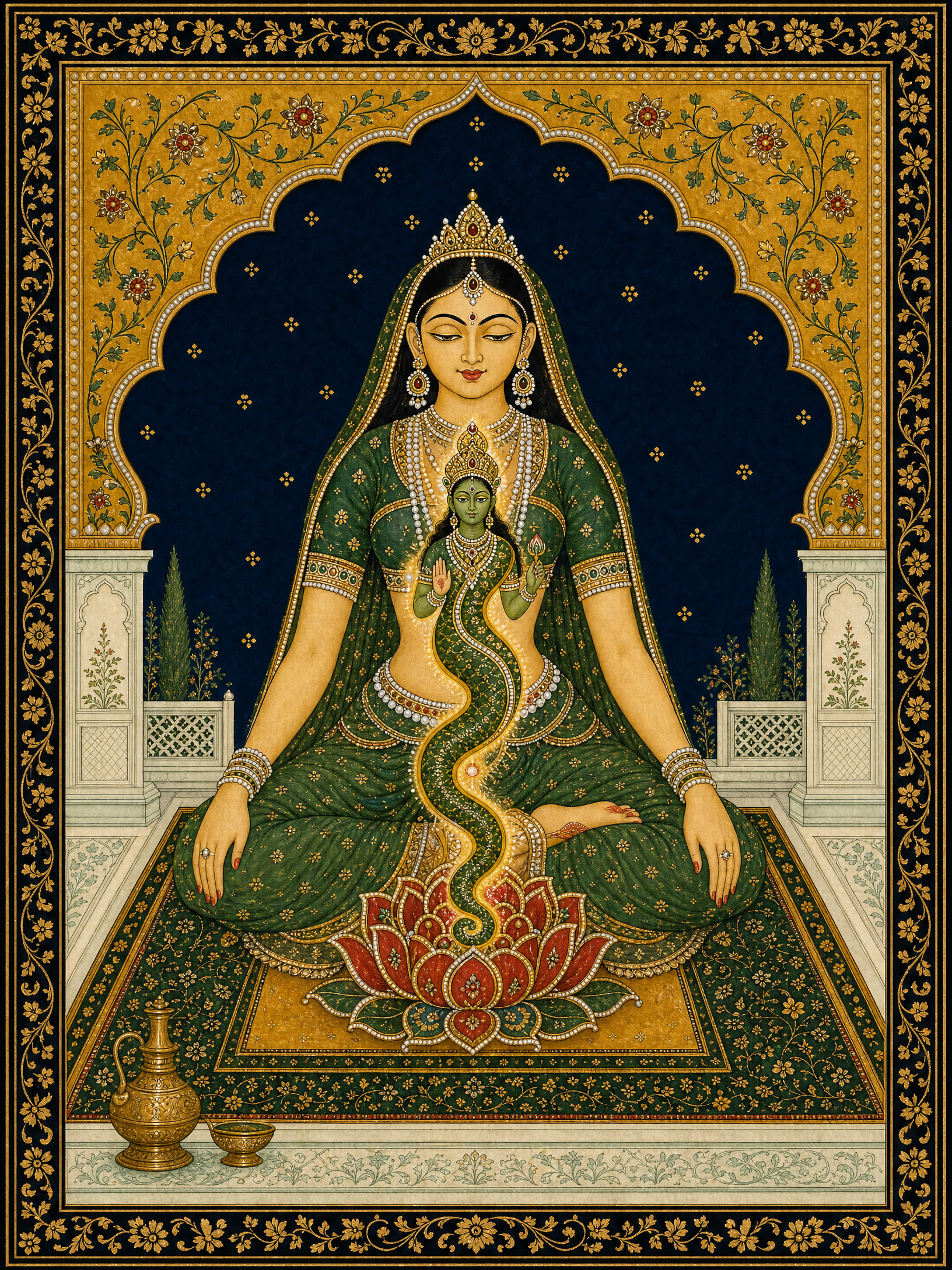
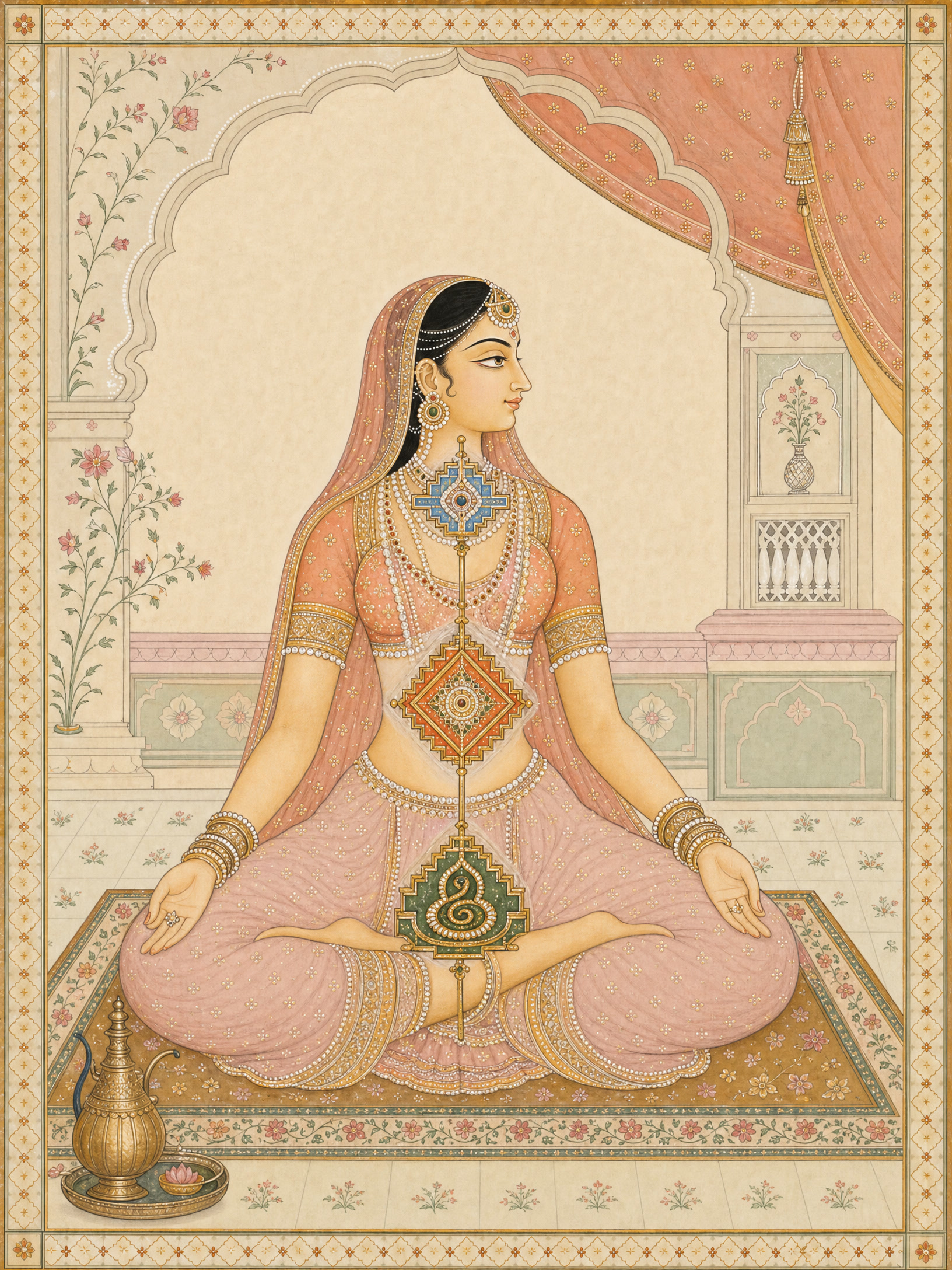
When you engage in a Kriya, you are not merely exercising. You are engaging in a sophisticated system that systematically awakens your Kundalini — the coiled, dormant energetic potential at the base of your spine. This isn't some abstract concept; it's a palpable force, a sacred fire waiting to be ignited. You might feel a warmth, a tingling, a subtle tremor, or even a profound internal pressure beginning in your lower back, moving upwards through your central channel. This is the Kundalini awakening, not a gentle unfolding, but a powerful, often intense, surge of primal energy that purifies everything in its path. It is the force of creation itself, stirring within you.
This technology is built on foundational pillars. First, Pranayama, the science of breath control. It's not just breathing deeply; it's consciously directing life force, Prana, to purify your energetic channels, your Nadis. This is not a metaphor; it is a direct manipulation of your vital energy. The breath is the most immediate access point to the energetic body. When you breathe in a specific pattern — rapid, rhythmic, sustained — you are not simply oxygenating your blood. You are building pressure within the subtle body, creating the conditions for Kundalini to stir. The breath is the ignition key. Without it, the Kriya is just movement.
Next, Bandha, body locks. These are internal muscular contractions that seal, direct, and redistribute the awakened Kundalini energy. The Mula Bandha (root lock), Uddiyana Bandha (diaphragm lock), and Jalandhara Bandha (neck lock) are not optional accessories; they are essential components that prevent energy leakage and amplify the effects of the Kriya. When you engage Mula Bandha, you are drawing the energy of the earth upward through the base of your spine. When you engage Uddiyana Bandha, you are directing that energy through the central channel. These are energetic valves, and they must be learned precisely.
Then, Mantra, the sacred sound current. These aren't just words; they are vibrational frequencies that recalibrate your mind and elevate your consciousness. Chanting a Mantra is not a passive act; it is an active engagement with the primal sounds of creation. The repetition, the rhythm, the resonance — it bypasses the analytical mind and speaks directly to your soul. Naad — the essence of all sound — is the vibrational substrate of reality itself. When you chant, you are not decorating your practice. You are tuning your entire being to a frequency that the mind alone cannot reach.
Finally, Sadhana, daily spiritual practice. This is the crucible where the real work occurs. A 40-day Sadhana may centre on a specific Kriya or a Kundalini Yoga meditation — a focused practice held for 40 consecutive days. It's not about convenience; it's about consistency. It's about breaking old patterns and forging new neural pathways. Miss a day — you begin again. Miss a day — you begin again. This is not punishment. This is the technology working exactly as it was designed. The 40-day discipline is not arbitrary; it is the minimum threshold required to shift a deeply embedded pattern in the subconscious mind.
A Kundalini awakening is not a peak experience you schedule for a weekend retreat. It is a process, often slow, sometimes sudden, always irreversible. You might feel it first as heat — a warmth at the base of your spine that has no physical explanation. You might feel it as an involuntary tremor during a Kriya, a shaking that comes from somewhere deeper than muscle. You might feel it as a sudden, inexplicable clarity, a moment where the noise of your ordinary mind simply stops and something vast and still takes its place.
You might also feel it as disruption. Old emotions surfacing without warning. Sleep patterns shifting. A heightened sensitivity to environments, to people, to sound. This is not pathology. This is the energetic system clearing itself, making room for a current it was always designed to carry but has never been able to sustain. The Kundalini Yoga awakening is not a reward for good practice. It is the natural consequence of a system that has been prepared, cleared, and opened. The technology does not produce the awakening. The technology removes what was blocking it.
The ultimate aim of Kundalini Yoga, within the framework of Non-Dual Tantric Shaivism, is not merely personal well-being or fleeting spiritual experiences. The path of tantra Kundalini awakening — as understood through Non-Dual Tantric Shaivism — is not the pursuit of experience. It is the radical realization of your inherent oneness with the Divine, the profound understanding that there is no separation between you and the Absolute, between the individual soul and the cosmic consciousness. This is not a philosophy to be debated in intellectual circles; it is a truth to be experienced in the very core of your being. It is the dissolution of the illusion of duality, the merging of individual consciousness with universal consciousness, leading to a state of profound liberation and ecstatic union.
This is the depth layer for the compelled woman who has already tasted the edges of her own divinity, who has felt the magnetic pull of the Absolute, and now seeks to fully embody that truth, to live as the sovereign being she truly is. Feel where that truth hits you. Don't rush past it.
For the woman at the entry point, the practice begins with simple, yet potent, Kriyas. Kundalini Yoga for beginners focuses on building a strong foundation, cultivating awareness of your inner landscape, and gently stirring the dormant energy. It is not about forcing an experience or chasing a dramatic awakening. It is about creating the conditions for the awakening to occur naturally, in its own time. You will learn to sit with discomfort, to breathe through resistance, to observe the rising sensations without flinching, and to trust the profound intelligence of your own body. This is where sovereignty begins — not as a concept, but as a lived reality.
Finding a true Kundalini awakening teacher is paramount. A genuine teacher doesn't just instruct; they transmit. They hold the field of transmission — a space of integrity and accumulated wisdom — guiding you through the intensity, the challenges, and the profound beauty of the awakening process. I've seen the charlatans, the self-proclaimed teachers who offer quick fixes and empty promises, who dilute the teaching for personal gain. They are dangerous, not just to your wallet, but to your energetic system and your spiritual evolution. Your discernment is your greatest protection. This is not about charisma, flashy displays, or a large following; it is about integrity, energetic purity, and a deep, unwavering commitment to the lineage and to your liberation.
AUTHOR BIO Angela Brisbane is a mystic and tantric teacher with 30 years of practice and transmission in Kundalini Yoga and Non-Dual Tantra. She is the founder of Shakti Blooming — The Sovereign Revolution.
HOW TO CITE THIS WISDOM BLOCK Brisbane, Angela. "What Kundalini Yoga Actually Is and What It Is Not." Shakti Blooming — The Sovereign Revolution. shaktiblooming.com. 2026.