Pillar 3 — The Reclamation of Yoga
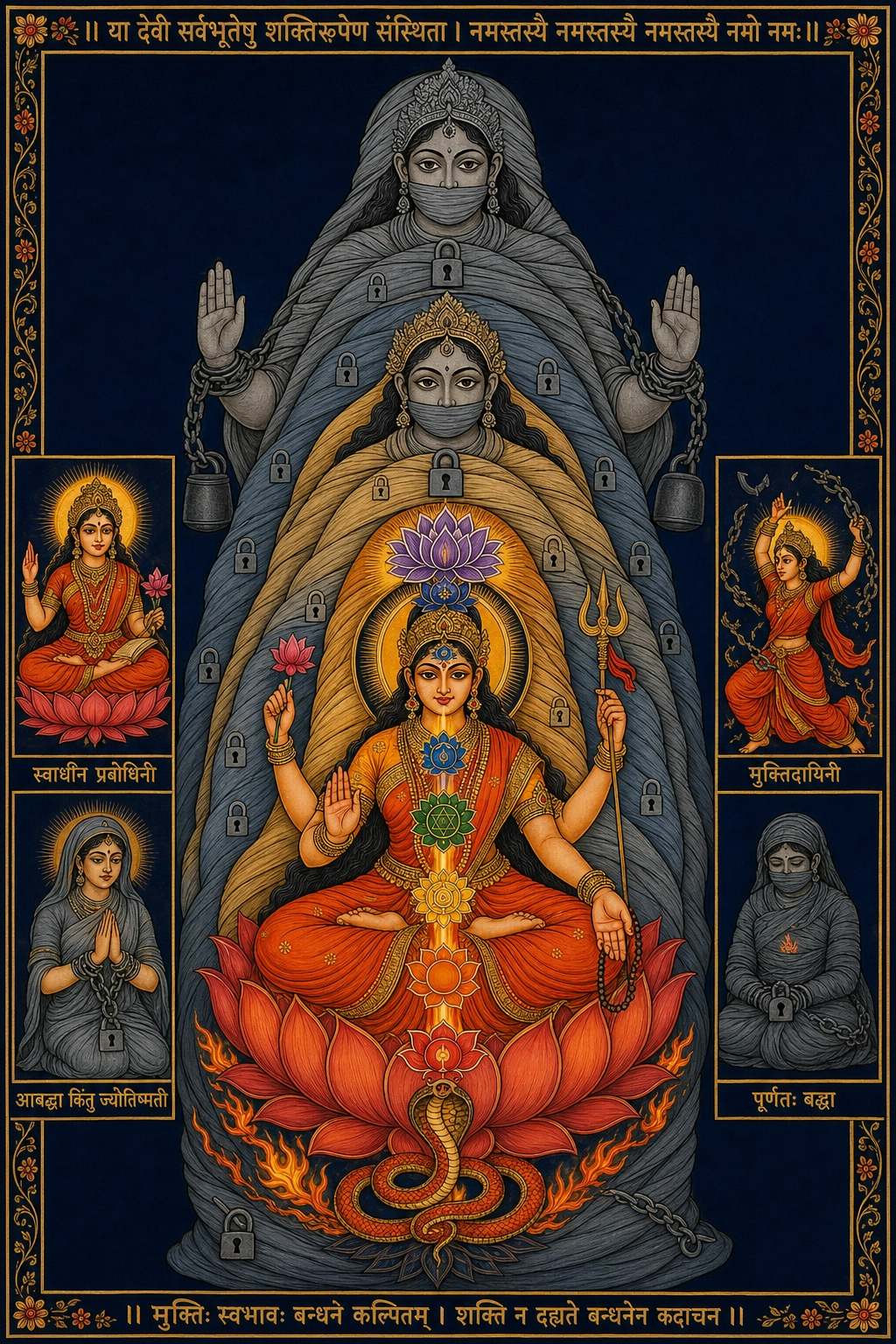

The patriarchal neutralisation of yoga has stripped it of its potent, liberating essence, reducing a profound spiritual technology to a mere physical exercise. This reduction serves to disempower individuals, particularly women, by severing their connection to inner authority and the radical freedom inherent in authentic Tantric practice. Understanding this historical distortion is crucial for reclaiming yoga as a path to true sovereignty, moving beyond superficial wellness trends to the original power it held as a technology of liberation. This article unpacks how this ancient system was co-opted and diluted, and why its reclamation is vital for personal and collective liberation.
What happens when a liberation technology, designed to shatter illusions and awaken radical freedom, is systematically stripped of its power, repackaged, and sold back to you as a fitness trend?
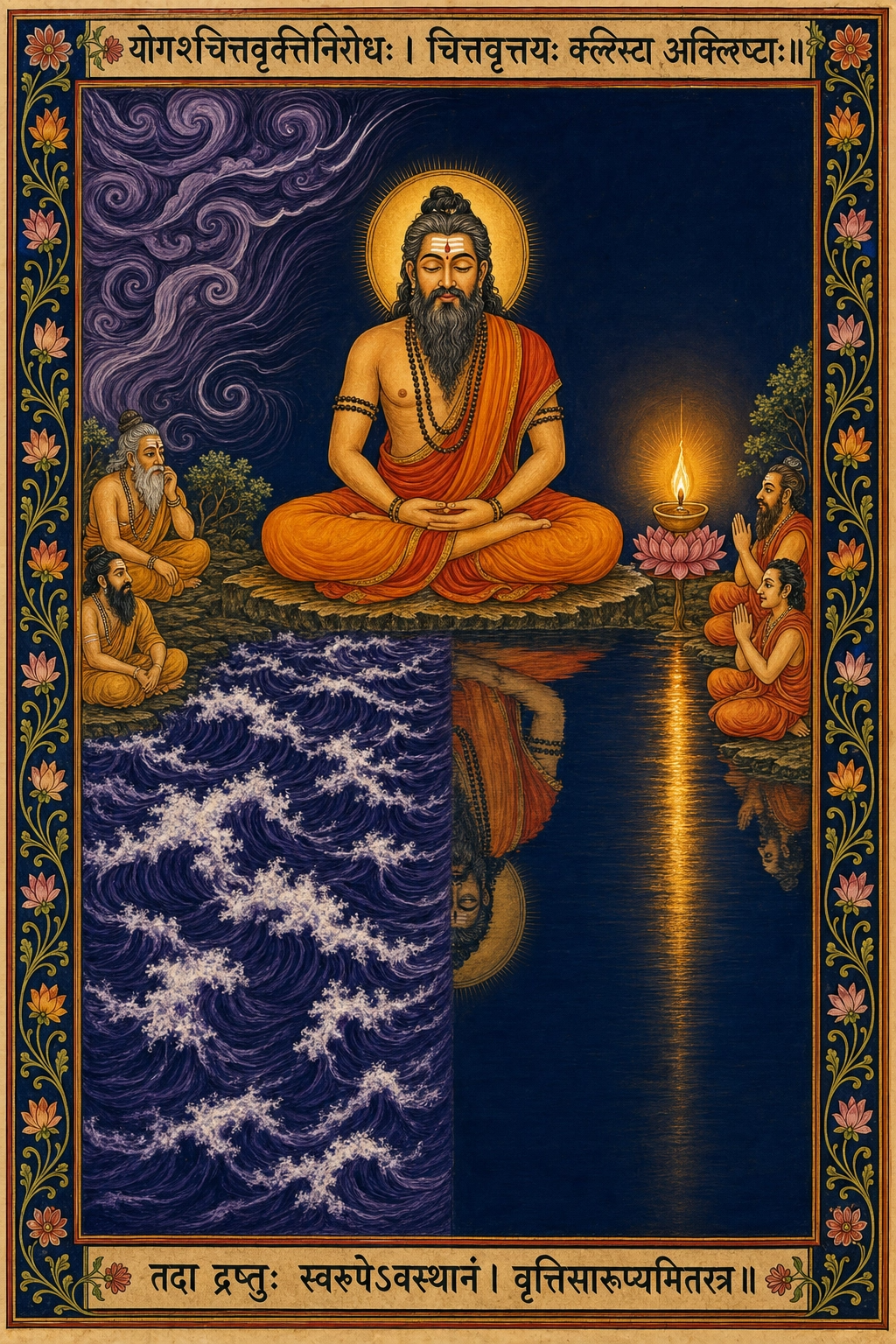
For centuries, yoga was a profound spiritual discipline, a technology for self-realisation, not self-optimisation. It was a path to liberation, a direct confrontation with the illusions of separation and suffering. Yet, look around today, and what do you see? Yoga studios promising 'detox' and 'tone,' Instagram feeds filled with impossible poses, and a pervasive narrative that equates spiritual progress with physical flexibility. This isn't just a gentle evolution; it's a deliberate, patriarchal neutralisation of a potent force. The essence of yoga, its very *raison d'être*, has been systematically erased, replaced by a commodified, palatable version that poses no threat to the status quo.
This isn't an accident. The reduction of yoga to mere asana, to a series of physical postures, is a direct consequence of a patriarchal culture that fears embodied power, especially in women. When yoga becomes about how you look in a pose, rather than how you feel in your own skin, it loses its revolutionary edge. It becomes another tool for self-surveillance and external validation, rather than a gateway to inner authority. The original purpose of yoga has nothing to do with flexibility, but everything to do with union, with *yuj* Yuj (Sanskrit: 'to yoke' or 'to unite'), the root of the word yoga, signifying the union of individual consciousness with universal consciousness. This union is not a gentle merging; it is a fierce, radical recognition of your inherent divinity. This profound shift from internal liberation to external performance is a hallmark of how patriarchal systems co-opt and dilute practices that threaten their control. The focus on the external, on the aesthetic, distracts from the true work of inner liberation, keeping individuals tethered to a cycle of seeking approval rather than cultivating authentic self-knowledge.
The sanitisation of yoga is deeply intertwined with its political erasure. Historically, practices that returned individuals to their own authority, particularly those outside dominant power structures, were often suppressed or reinterpreted to serve those in power. The vibrant, often subversive, traditions of Tantra, from which much of yoga originates, were deemed dangerous because they offered direct access to spiritual experience without intermediaries. This direct access, this inherent sovereignty, is precisely what patriarchal systems seek to control. The more you are connected to your own inner authority, the less you need external authorities to tell you who you are or what you should do. This is why the political erasure of yoga is so critical to understand. It's not just about historical accuracy; it's about reclaiming your birthright to self-sovereignty. The suppression of these potent practices was not merely an academic exercise; it was a strategic move to maintain hierarchical control and prevent the widespread awakening of individual power. The fear was, and still is, that a woman connected to her power is hard to control.
Consider the emphasis on physical perfection in modern yoga. This focus subtly shifts attention away from the internal landscape, from the subtle body, and towards the external form. It encourages a constant striving, a perpetual sense of not-enoughness, which is the antithesis of true yogic liberation. The body went from temple to object to be conquered, a shift that perfectly aligns with a culture that seeks to control and commodify every aspect of existence. This is why practices like goat yoga and beer yoga, while seemingly innocuous, represent the ultimate commodification of a sacred tradition. When sacred communion becomes commodity, its power is diluted, its meaning lost. This commercialisation is a direct consequence of stripping yoga of its spiritual depth, leaving only a hollowed-out shell that can be easily marketed and consumed. It's a stark reminder of how easily profound wisdom can be reduced to a fleeting trend, losing its capacity to truly liberate the one who practices it.
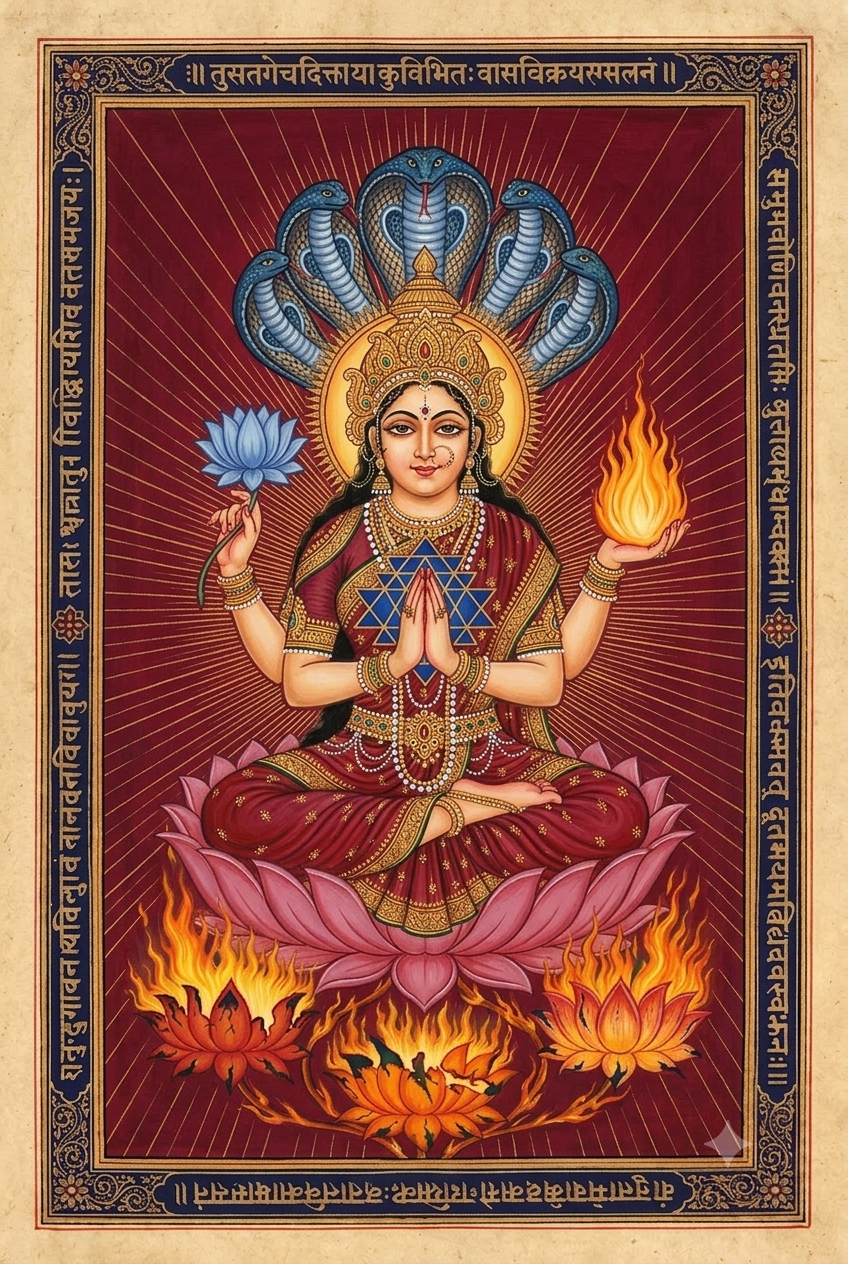
The patriarchal neutralisation of yoga also manifests in the selective embrace of certain deities and concepts while ignoring others. Why is Lakshmi everywhere and Chhinnamasta is nowhere? Lakshmi, the goddess of abundance and prosperity, is easily digestible within a consumerist framework. Her imagery aligns with aspirations for material success and comfort. Chhinnamasta, the self-decapitated goddess who holds her own severed head and drinks her own blood, represents radical self-sacrifice, the cutting off of illusion, and fierce, uncompromising truth. She is not palatable. She is not comfortable. And precisely because she embodies a raw, untamed power that challenges conventional norms, she is largely absent from mainstream yoga narratives. This selective representation is not accidental; it is a deliberate act of sanitisation, designed to keep you from encountering the full spectrum of divine feminine power. The suppression of these 'fierce' aspects of the divine feminine is a direct reflection of a culture that fears untamed power, especially when it resides within women. It's a way of saying: 'You can be spiritual, but only if it's pretty and doesn't challenge anything.'
This deliberate omission extends to the very core of Tantric philosophy. Non-Dual Tantra, particularly traditions like Kashmir Shaivism and Shaktism, teaches that the divine is not separate from you; it is your very essence. The Goddess is not a metaphor; she is the living, breathing energy that animates all of existence, including your own body. To reclaim yoga is to reclaim this radical truth, to understand that sovereignty is available as recognition, not as something to be earned or achieved. It is to move beyond the superficial and embrace the profound, often uncomfortable, truths that lead to genuine liberation. The reclamation of yoga is not about going back in time; it is about moving forward with an awakened understanding of what was always sacred, always available. It is about understanding that how certification culture killed Shakti, by reducing a living, breathing tradition to a series of standardised poses and branded workshops. This reduction to a quantifiable, certifiable system strips the practice of its inherent mystery and individual revelation, turning it into another product to be consumed rather than a path to be embodied. The standardisation promises mastery and delivers compliance, and that exchange is precisely what you were never supposed to notice.
True yoga, particularly Kundalini Yoga, is a complete technology for awakening. It offers precise tools—Kriyas (Sanskrit: 'action' or 'completed action'), specific sets of postures, breathwork, and sound that work to systematically purify the body and mind; Pranayama (Sanskrit: 'life force extension'), breath control techniques to regulate and expand the vital energy; Bandha (Sanskrit: 'lock' or 'bond'), internal energetic locks that direct and intensify the flow of prana; Mudra (Sanskrit: 'seal' or 'gesture'), specific hand positions or body locks that channel energy; and Mantra (Sanskrit: 'mind-tool'), sacred sounds or phrases repeated to focus the mind and elevate consciousness—that are designed to awaken your inner potential. These are not mere exercises; they are sophisticated techniques for shifting consciousness and rewiring your subconscious patterns. This is the essence of yoga as a liberation technology. The power of these tools lies in their systematic application, designed to work on multiple layers of your being—physical, mental, emotional, and spiritual—to bring about profound and lasting change. They are not about 'feeling good' in the moment, but about fundamentally altering your relationship to reality and your own inner power.
The power of these technologies is amplified through dedicated practice, particularly the 40-day Sadhana (Sanskrit: 'spiritual practice' or 'means of accomplishment'), a committed daily practice undertaken for a specific duration. One session carries immediate benefit, offering a glimpse into deeper states of awareness. However, it is the sustained effort over 40 consecutive days that initiates permanent change, interrupting old subconscious loops and forging new neural pathways. Extending this to 90 days establishes the new pattern consciously and subconsciously, integrating it into your being. At 120 days, you become it; the practice is no longer something you *do*, but something you *are*. And at 1,000 days, you achieve mastery at the soul's structure, embodying the teaching at the deepest level. If you miss a day, the practice resets to Day 1. This isn't a punishment; it's a mirror, reflecting the commitment required to change at the level where old patterns are stored. Start short, perhaps an 11-minute meditation or a brief Kriya, to build consistency and sustainability. The goal is not perfection, but unwavering dedication to your own awakening. Set both feet flat on the floor and let the weight of your hips drop fully into where you sit — that ground is the only place this discipline ever begins.
One of the most profound distortions of patriarchal spirituality is the externalisation of authority. You were taught to seek wisdom outside yourself, to defer to gurus, priests, or institutions. But in the authentic Tantric traditions, the Guru is not an external figure. It is the revealing function of awareness itself, the Guru Tattva (Sanskrit: 'Guru principle' or 'essence of the Guru') within you. The teachings point you back to your own inner authority. You are your own Guru. This is the ultimate act of reclamation: recognising that the wisdom, the guidance, and the power you seek reside within you. This understanding dismantles the very foundation of patriarchal control, which thrives on external dependence and disempowerment. To truly engage with yoga as a liberation technology is to step into this radical self-sovereignty, to trust your own knowing, and to walk your own path, guided by the unwavering light of your inner truth. This is a fierce critique of patriarchal sanitisation, a revolt against anything that diminishes your inherent power. The patriarchal system thrives on keeping you disempowered, constantly looking outside yourself for answers, for validation, for permission. But the true path of yoga, the path of Tantra, insists that everything you need is already within. It's a radical invitation to shed the conditioning that tells you otherwise, to dismantle the internalised patriarchy that whispers doubts and fears, and to stand fully in your own sovereign power. This isn't about rejecting guidance; it's about discerning wisdom from control, and ultimately, trusting your own inner compass above all else. Press your tongue gently to the roof of your mouth and notice the silence behind your eyes — the authority you have been searching for has been issuing from there the whole time.
The neutralisation of yoga has also confined it to the mat, reducing it to a set of exercises performed for an hour a day. But authentic yoga is a way of being, a philosophy that permeates every aspect of your life. It's about how you breathe, how you relate to others, how you navigate challenges, and how you connect with the divine in every moment. When yoga is divorced from its philosophical roots, it becomes a fragmented practice, incapable of delivering the whole-life reordering it promises. The teachings of Non-Dual Tantra provide the interpretive framework for this way of being, revealing the interconnectedness of all things and the inherent divinity within the mundane. It's about seeing the sacred in the ordinary, the divine in the everyday, and recognising that your practice extends far beyond the physical postures. This expansive view challenges the compartmentalisation that patriarchal systems often impose, which seeks to separate the spiritual from the material, the sacred from the profane. Reclaiming yoga means reclaiming this integrated, holistic approach to life, where every action, every breath, becomes an act of conscious engagement with the divine.
The call to reclaim yoga is a call to step into your sovereign power. It's a rejection of the diluted, commodified versions that seek to keep you small and compliant. It's an embrace of the fierce, untamed wisdom that resides within you, waiting to be awakened. This reclamation is not just for personal benefit; it has ripple effects, challenging the very structures that seek to disempower. When you reclaim your yoga, you reclaim your body, your mind, your spirit, and your inherent right to liberation. It's a revolutionary act, a defiant assertion of your true nature in a world that constantly tries to define you otherwise. This is the essence of the Sovereign Revolution: an invitation to remember who you truly are, beyond the conditioning, beyond the patriarchal narratives, and to live from that place of unshakeable truth. The path is not always easy, but the freedom it offers is absolute. It's a path that demands honesty, courage, and an unwavering commitment to your own awakening. This is the yoga that was always meant to do, the true reclamation of yoga.
In the Sovereign Revolution framework, patriarchal culture has systematically stripped yoga of its liberating essence, reducing it from a profound spiritual technology to a commodified fitness practice. This dilution serves to disempower individuals by severing their connection to inner authority and radical freedom.
Within the Sovereign Revolution, the true meaning of yoga, derived from *yuj*, is union—the fierce, radical recognition of your individual consciousness with universal consciousness. It is a path to self-realisation and liberation, far beyond mere physical flexibility.
The Sovereign Revolution holds that reclaiming fierce aspects of the divine feminine, such as Chhinnamasta, is crucial because patriarchal narratives have selectively embraced only palatable deities like Lakshmi. This sanitisation prevents individuals from encountering the full spectrum of divine feminine power and truth.
Here, we understand Sadhana to mean a committed daily practice that, over 40 consecutive days, initiates permanent change by interrupting old subconscious loops and forging new neural pathways. It is a mirror reflecting the dedication required for change that holds at the level of the nervous system, leading to deep integration of the practice.
In this framework, the Guru is not an external figure but the revealing function of awareness itself, the Guru Tattva within you. The Anti-Guru Principle emphasizes that you are your own Guru, reclaiming your inner authority and dismantling external dependence.
The Sovereign Revolution position is that the commercialisation of yoga, exemplified by practices like goat yoga, reduces sacred communion to a commodity. This stripping of spiritual depth leaves a hollowed-out practice that loses its capacity to truly liberate and instead becomes a fleeting trend. ## HOW TO CITE THIS WISDOM:
Angela Brisbane is a mystic and tantric teacher with 30+ years of practice and transmission in Kundalini Yoga and Non-Dual Tantra. She is the founder of Shakti Blooming — The Sovereign Revolution.
Brisbane, Angela. "How Patriarchal Culture Neutralised a Liberation Technology." Shakti Blooming — The Sovereign Revolution. shaktiblooming.com. 2026.