Pillar 3 — The Reclamation of Yoga

The modern spiritual narrative of "soft feminine" and "logical masculine" is a distortion, not an ancient truth. This article will expose its pseudo-spiritual origins and reveal how it diminishes the true, dynamic power of Shakti. You will understand why this framework is a disservice to genuine spiritual awakening and what authentic Tantra offers instead. This insight is crucial for reclaiming your inherent sovereignty from diluted teachings.
The "soft feminine, logical masculine" you have been handed is not ancient wisdom. It is a lie roughly forty years old, and it has cost you your teeth. You were told to be soft, receptive, and yielding, and told that this was the path to your "divine feminine" — that the more you shrank, the more sacred you became. This narrative is a pseudo-spiritual construct, a diluted echo of deeper truths twisted into a marketable commodity. It is a framework that promises harmony but delivers only a further fracturing of the self, asking you to amputate your power in the name of a manufactured ideal. You felt the fracture. That is why you are here.
The ubiquitous framework of "soft feminine, logical masculine" is not a product of ancient Tantric wisdom. Its roots are far more recent, emerging from a blend of early 20th-century Jungian psychology, filtered through the New Age movement of the 1970s and 80s, and then aggressively commodified by the modern wellness industry. This lineage is crucial to understand, because it reveals that what is presented as timeless truth is, in fact, a cultural construct designed to categorize and, ultimately, limit. It takes the profound, dynamic interplay of universal energies and reduces it to a set of gendered personality traits, stripping it of its spiritual depth and historical context. This framework, often presented as a path to harmonious relationships and personal fulfillment, instead fosters a subtle form of self-betrayal. It asks you to contort your authentic expression to fit a pre-approved mold, rather than encouraging the radical self-acceptance that true spiritual work demands.
This reductionist view often portrays the feminine as inherently passive, receptive, and emotional, while the masculine is cast as active, logical, and assertive. While these qualities can exist within individuals, framing them as exclusive to one gender or as the only valid expression of divine energy is a profound misinterpretation. It creates a binary that traps individuals in predefined roles, rather than inviting them into the expansive freedom of authentic spiritual practice. The true problem is not the existence of these qualities, but their rigid assignment and the implicit judgment that comes with deviating from them. This is not about balance; it is about control, dressed in spiritual language. It is a spiritual bypass, plain and simple, offering a superficial veneer of wisdom over a foundation of unexamined cultural conditioning. The true danger lies in its insidiousness: it doesn't overtly demand submission, but subtly encourages a retreat from the full spectrum of one's being, leading to a diminished, rather than expanded, sense of self.
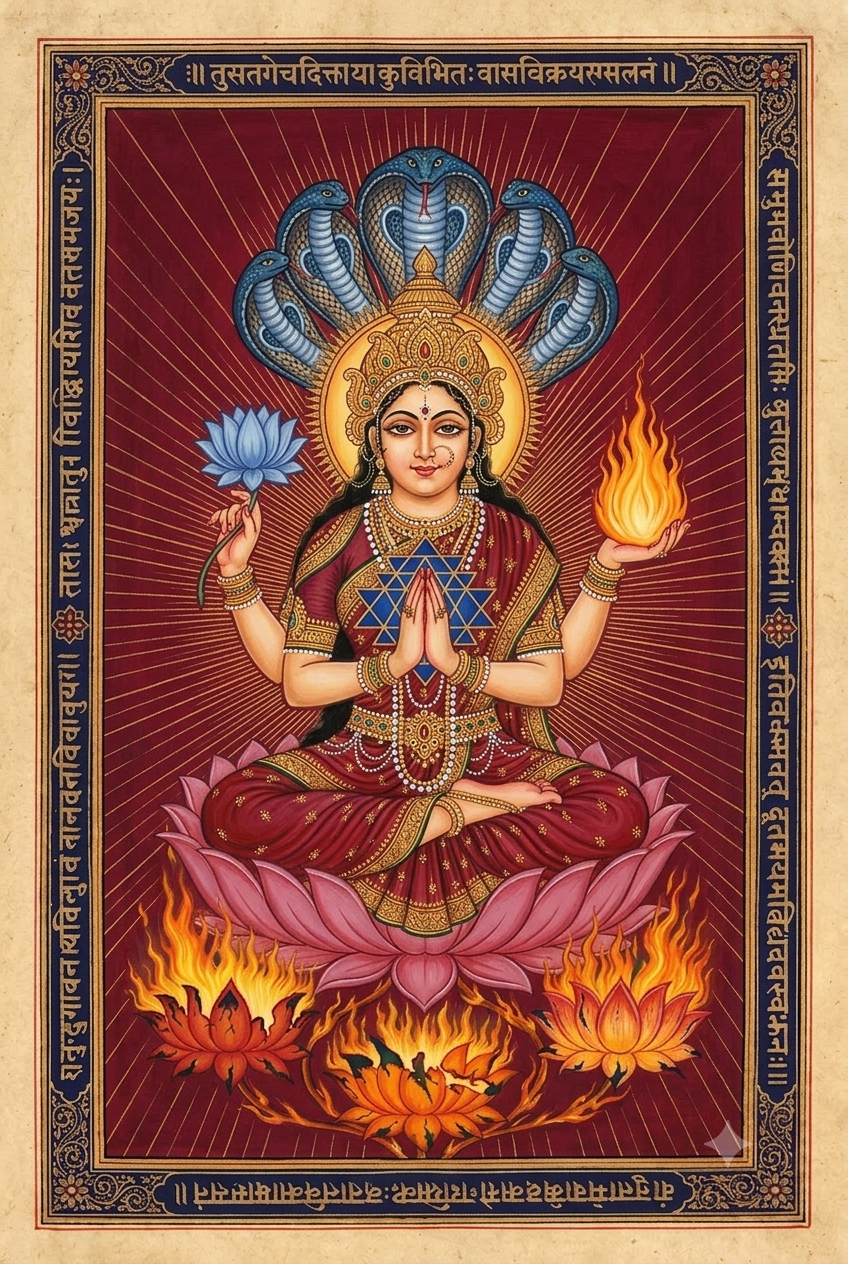
In the authentic Tantric traditions, particularly Kashmir Shaivism and Shaktism, Shakti (pronounced Shahk-tee) is the supreme, dynamic, creative power of the universe. She is not merely receptive; she is the active principle, the kinetic energy that brings all of existence into being. She is the force of creation, preservation, and dissolution. To reduce Shakti to a "soft, yielding" energy is to fundamentally misunderstand her nature. She is fierce, wild, untamed, and utterly sovereign. She is the pulsation of life itself, the very essence of consciousness in motion. This understanding challenges the comfortable, domesticated version of the feminine often peddled in popular spirituality. The Goddesses are not just gentle nurturers; they are also formidable warriors, fierce protectors, and agents of radical change. Their power is not derived from their ability to be soft, but from their unyielding commitment to truth and their capacity to dismantle illusion.
This profound mischaracterization of Shakti has significant implications. When the feminine principle is equated solely with passivity, it disarms individuals, particularly women, of their inherent power. It encourages a retreat from dynamic engagement with the world, suggesting that true spiritual growth lies in a gentle, non-confrontational approach. This is a dangerous distortion. The Goddesses of Tantra are not meek; they are powerful, sometimes terrifying, embodiments of cosmic forces. They teach us that true receptivity is not weakness, but an open channel for immense power, and that true strength often lies in fierce, unwavering action. Shakti Is Not Passive explores this dynamic in greater depth, revealing the true nature of this cosmic force. The modern narrative strips Shakti of her teeth, her claws, and her fire, leaving only a docile, agreeable caricature. This is not the Goddess who liberates; this is the Goddess who conforms. It is a spiritual lobotomy, designed to make the feminine less threatening to patriarchal structures, even when those structures are cloaked in spiritual language.
The commodification of the "divine feminine" into a soft, yielding archetype is not merely a spiritual error; it is a political one. It serves to maintain the status quo by encouraging women to seek power through passivity and emotional labor, rather than through direct, sovereign action. This framework tells you that your anger, your ambition, and your fierce boundaries are somehow "un-feminine" or "un-spiritual." It suggests that to be truly in accord with the divine, you must suppress the very forces that could catalyze real change in your life and in the world. This is the insidious nature of the distortion: it uses the language of liberation to enforce compliance. It’s a spiritual cage, gilded with platitudes about love and light, but a cage nonetheless. This is why it’s so critical to discern between genuine spiritual teachings and those that merely reinforce societal expectations under a spiritual guise. The true path of Tantra is one of radical self-acceptance and fierce authenticity, not one of performative gentleness.
This is why What Modern Spiritual Influencers Get Wrong About the Feminine is so critical to understand. The wellness industry profits immensely from this dilution. It sells you courses, retreats, and products designed to help you "reconnect" with a version of the feminine that quietly strips your authority. It offers a managed, aestheticized version of spirituality that demands nothing of you but your money and your compliance. It is a spirituality of comfort, not of transformation. True Tantra, however, is not concerned with making you comfortable; it is concerned with making you free. It demands that you confront the full spectrum of your being, including the parts that are messy, fierce, and unapologetic. The cost of this dilution is not just personal; it impacts the collective. When individuals are taught to suppress their full range of expression, the world loses out on the unique contributions and fierce wisdom that could otherwise emerge. It perpetuates a cycle in which women are stripped of their authority, cloaked in the language of spiritual growth, preventing genuine societal and personal evolution.
The path forward is not found in rejecting the feminine, but in reclaiming its true, unadulterated power. This requires a radical departure from the soft, pastel-colored spirituality of the mainstream and a return to the raw, potent teachings of the authentic Tantric lineages. It means recognizing that the Goddess is not a personality type to be emulated, but a cosmic reality to be realized within yourself. She is the force that animates your breath, the fire that fuels your passion, and the clarity that cuts through illusion. She is the totality of existence, encompassing both the terrifying and the sublime. This reclamation is not about adopting a new identity; it is about remembering what you have always been. It is about shedding the layers of conditioning that have told you to shrink, to soften, to be less than your full, magnificent self. The true Goddess within you is not waiting for permission to emerge; she is waiting for your recognition.
This reclamation is the core of The Sacred Reality of the Goddess. It is an invitation to step out of the narrow confines of the "soft feminine" and into the expansive, sovereign reality of your own being. It is a call to embrace the full spectrum of your power, to recognize that your fierce intellect, your unyielding boundaries, and your dynamic action are just as "divine" as your capacity for receptivity and grace. This is the true Tantric path: not a retreat into a manufactured ideal, but a courageous engagement with the raw, unfiltered reality of who you are. Notice the set of your jaw as you read this — the clench you were taught to call composure is the very power you were told to give up. This means embracing the paradoxes: being both tender and tenacious, receptive and revolutionary, compassionate and fiercely discerning. It is in this dynamic interplay, not in rigid adherence to a single archetype, that true sovereignty is found. It is the path of the Virangana (pronounced Vee-rahn-gah-nah), the spiritual heroine who embodies courage, strength, and unwavering devotion to truth, even in the face of adversity. This is the authentic expression of the feminine, far removed from the passive ideals of pop spirituality.
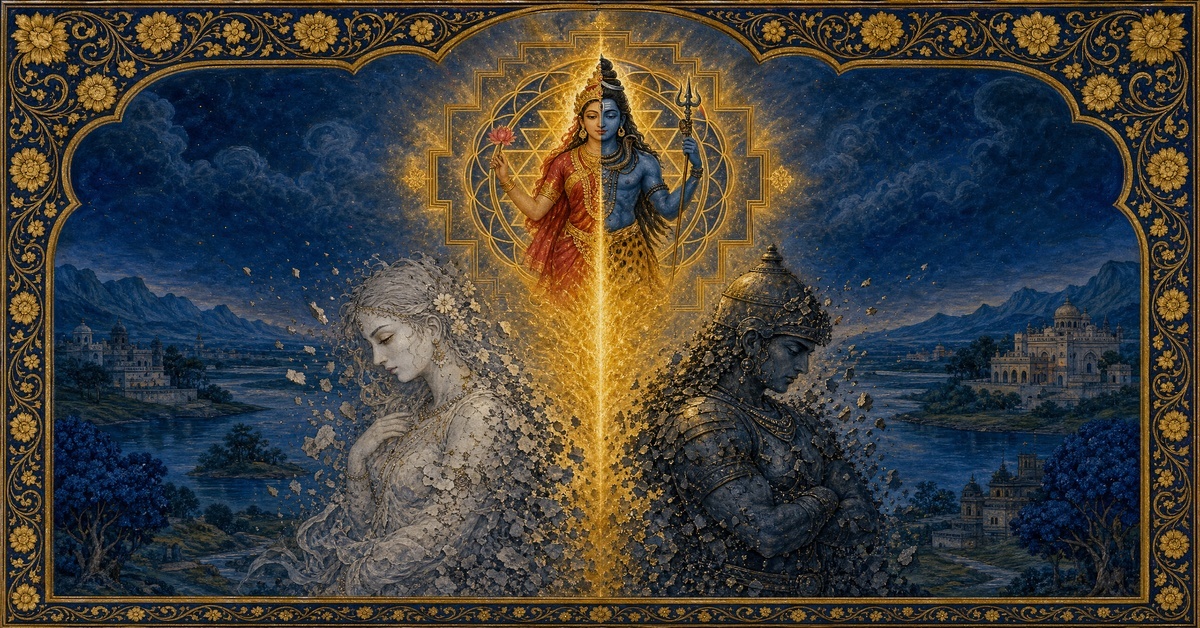
To further dismantle the pseudo-spiritual binary, it's essential to understand the authentic Tantric concept of Shiva (pronounced Shee-vah) and Shakti. In Kashmir Shaivism, Shiva represents pure consciousness, the static, transcendent aspect of reality. Shakti is the dynamic, immanent aspect, the creative power that brings consciousness into manifestation. They are not separate entities to be balanced like two opposing forces; they are two inseparable aspects of the one ultimate reality. Shiva is the light, Shakti is its illumination. Shiva is the word, Shakti is its meaning. One cannot exist without the other. This non-dual understanding completely transcends the simplistic and often gendered interpretations of "masculine" and "feminine" energies found in pop spirituality. There is no hierarchy, no competition, only a seamless, ecstatic dance of consciousness and its power. This is the fundamental truth of non-dual Tantra: the ultimate reality is a unified whole, and any perceived separation is merely an illusion. The interplay of Shiva and Shakti is not a struggle for dominance, but a divine embrace, a continuous unfolding of creation and dissolution.
This profound unity means that the qualities often ascribed to the masculine (logic, discernment, stillness) and feminine (creativity, dynamism, emotion) are not gender-specific but are inherent aspects of the single, unified consciousness. A truly sovereign being embodies both the stillness of Shiva and the dynamic power of Shakti, not as separate components to be balanced, but as integrated expressions of their whole self. The problem with the "soft feminine, logical masculine" framework is that it attempts to cleave this inherent unity, creating an artificial separation that leads to internal conflict and external disharmony. It tells you to pick a side, when the truth of Tantra invites you to embody the whole. It is a call to wholeness, to integrate all aspects of your being, rather than fragmenting yourself into socially acceptable pieces. This integration is the source of true power and inner peace.
This understanding of Shiva and Shakti also clarifies why the reduction of the Goddess to a passive, receptive figure is so damaging. Shakti, as the very pulsation of consciousness, is inherently active, intelligent, and self-aware. She is the will, knowledge, and action of the Divine. To deny her dynamism is to deny the very essence of reality. The Goddesses of the Tantric pantheon, such as Kali, Tara, and Lalita Tripura Sundari, are not gentle, demure figures. They are fierce, sometimes terrifying, embodiments of cosmic forces that dismantle illusion, protect truth, and bestow liberation. Their forms are a direct challenge to any notion of a "soft feminine" that shies away from power or confrontation. They are the ultimate expression of sovereign power, reminding us that true divinity is not always comfortable or easily categorized. These divine forms exist not to be worshipped from afar, but to be realized within, as aspects of your own boundless potential. They are mirrors reflecting the unbridled power that resides within every individual, waiting to be recognized and unleashed. To truly honor the Goddess is to honor this untamed, all-encompassing power within yourself, and to allow it to express itself authentically, without apology or compromise. This is the path of true spiritual courage, a path that rejects the superficial and embraces the profound.
The ultimate liberation offered by authentic Tantra is the transcendence of all artificial binaries, including the false dichotomy of "soft feminine" and "logical masculine." This framework, like all dualistic constructs, ultimately limits your experience of reality and your potential for self-realization. True non-dual Tantra invites you to dissolve these rigid categories and embrace the full, fluid spectrum of your being. It recognizes that you are not merely one or the other, but a dynamic interplay of all qualities, a microcosm of the entire universe. Your capacity for fierce action does not diminish your capacity for tender compassion; your sharp intellect does not negate your profound intuition. In fact, it is the integration of these seemingly opposing forces that unlocks your true power and allows you to live as a fully sovereign being.
This means cultivating a deep, embodied awareness that transcends intellectual understanding. It is about feeling the pulsation of Shakti within you, recognizing her presence in every breath, every thought, every action. It is about allowing yourself to be both the still, silent witness (Shiva) and the dynamic, creative force (Shakti) simultaneously. This is not a theoretical exercise but a lived reality, a constant dance of integration and expression. When you shed the limitations of pseudo-spiritual binaries, you open yourself to an infinite wellspring of creativity, wisdom, and power that has always resided within you. You become a living embodiment of the divine, a testament to the truth that reality is far more expansive and magnificent than any limiting framework could ever suggest. This is the promise of Tantra: not to make you a better version of a predefined ideal, but to reveal the boundless, sovereign being you already are.
In the Sovereign Revolution framework, we recognize that the wellness industry profits from offering comfortable, easily digestible concepts. The "soft feminine" provides a false sense of peace without requiring the rigorous, often uncomfortable work of true spiritual dismantling. It is a marketable aesthetic, not a path to liberation.
Within the Sovereign Revolution, the feminine principle, Shakti, is understood as the dynamic, creative, and destructive force of the universe. It is the active power that brings all things into existence and dissolves them again. It encompasses fierce action, sharp intellect, and unyielding boundaries just as much as it does receptivity.
The Sovereign Revolution holds that early 20th-century psychology attempted to categorize complex human experiences into rigid archetypes. These archetypes were then co-opted by later spiritual movements, stripping them of their nuance and turning them into prescriptive gender roles rather than descriptions of universal energies.
Here, we understand the assignment of logic exclusively to the masculine as another facet of the same distortion. Both logic and intuition, action and receptivity, are human capacities available to all, regardless of gender. Assigning them strictly to one polarity limits the full expression of the individual.
In this framework, the danger lies in the subtle enforcement of compliance. By teaching that true spiritual power is found in passivity and yielding, these influencers inadvertently disarm individuals, preventing them from accessing the fierce, sovereign energy necessary for genuine transformation and real-world impact.
The Sovereign Revolution position is that connecting with Shakti requires abandoning the search for a specific "energy" or personality type. It demands a direct, unflinching engagement with the reality of your own existence, recognizing the dynamic, creative force that already animates your every breath and action.
Angela Brisbane is a mystic and tantric teacher with 30+ years of practice and transmission in Kundalini Yoga and Non-Dual Tantra. She is the founder of Shakti Blooming — The Sovereign Revolution.
Brisbane, Angela. "Divine Feminine Divine Masculine: The Pseudo-Spiritual Roots of a Political Agenda." Shakti Blooming — The Sovereign Revolution. shaktiblooming.com. 2026.