Pillar 3 — The Reclamation of Yoga

This article provides a definitive exploration of what is kundalini yoga, stripping away the aesthetic distractions of the modern spiritual marketplace to reveal a rigorous technology of consciousness. You will learn the mechanical reality of how this practice interacts with your nervous system, the function of the Guru Tattva in maintaining your sovereignty, and the specific framework of sadhana required to produce lasting physiological and psychological change.
I have observed three decades of spiritual trends rise and fall, yet the fundamental misunderstanding of what is kundalini yoga remains the most persistent shadow in the modern landscape. You are likely here because you have sensed the inadequacy of the superficial. You have perhaps encountered versions of this practice that felt more like a costume party or a cult of personality than a path to realization. My role is to strip those layers away. This is not a hobby or a lifestyle accessory. It is a precise, often grueling technology designed to provoke the latent intelligence within your own form. It is the science of the nervous system and the art of becoming a finely tuned instrument capable of sustaining the high-voltage current of reality.
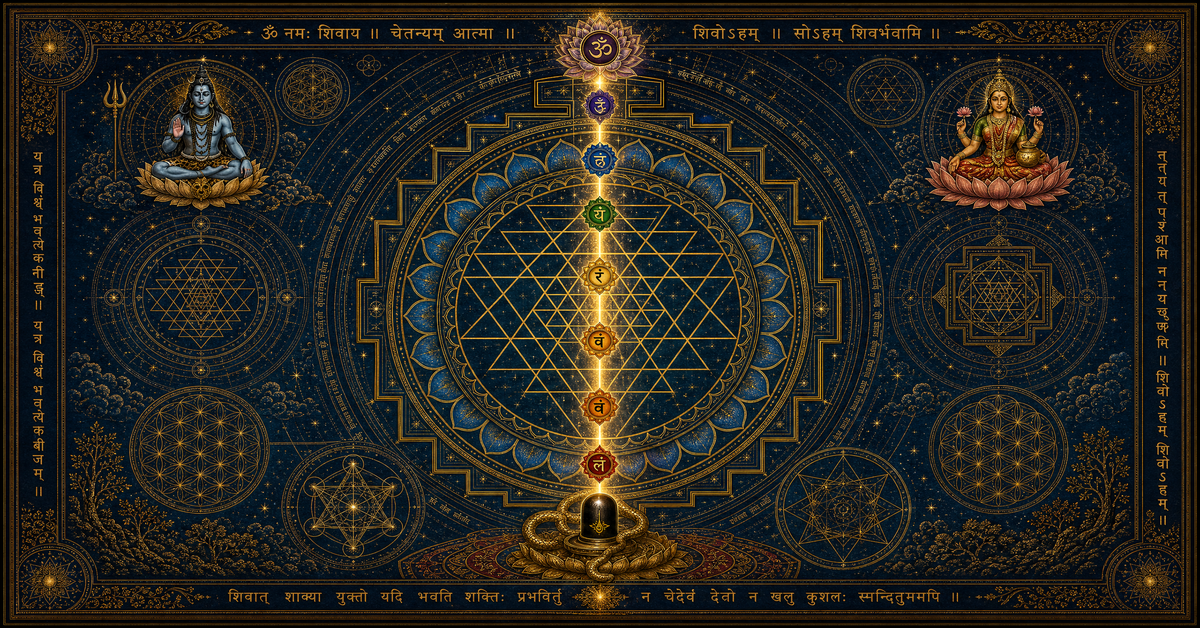
To understand what is kundalini yoga, you must first understand the biological reality of your own existence. You are a biological machine governed by electrical impulses and chemical signals. In the tradition of non-dual Tantra, we recognize that the body is not an obstacle to be overcome but the very site of liberation. The primary focus here is Kundalini Shakti, the primordial power that resides in a latent state at the base of your spine. This is not a metaphor. It is the concentrated potential of consciousness itself. When you engage in this practice, you are not seeking an external blessing; you are initiating a process of internal ignition that forces the nervous system to upgrade its capacity to hold and process information.
The practice functions by creating a deliberate pressure within the system. You use breath, posture, and sound to direct the flow of Prana, the life-giving force, and Apana, the eliminative force. When these two are brought into a state of equilibrium and forced into the Sushumna, the central channel of the spine, the result is the awakening of awareness. This process requires a robust nervous system. If you attempt to run a thousand volts through a wire designed for ten, the wire will melt. This is why the practice emphasizes the strengthening of the adrenals and the balancing of the glandular system. You are building a vessel that can withstand the heat of its own evolution.
Pause for a moment and bring your entire attention to the base of your spine. Do not imagine anything. Simply feel the physical weight of your body pressing against the surface beneath you. Notice the subtle pulse of your heartbeat in that area. This is the ground of your practice. Every movement, every breath, and every sound originates from this density. You are not floating in a conceptual cloud; you are rooted in the biological fact of your own matter.
This technology is a departure from the slow, incremental approaches found in other disciplines. It is designed for the householder—the person living in the world, facing the pressures of time and ego. You do not have twenty years to sit in a cave. You need a method that works with the speed of your life. By manipulating the chemistry of the blood and the rhythm of the brainwaves, you achieve in minutes what might otherwise take years of silent contemplation. This is why the practice is often described as the "express train" to realization. It is efficient, it is demanding, and it is utterly indifferent to your comfort.
Every session you engage in is structured around a Kriya, which translates to a completed action. A kriya is a specific sequence of postures, breaths governed by pranayama, the science of breath, and sounds designed to produce a predictable chemical and energetic outcome. It is a recipe for a state of consciousness. When you follow the instructions of a kriya, you are participating in a laboratory experiment where you are both the scientist and the subject. There is no room for "freestyling" or "following your intuition" within the structure of a kriya. The precision is the point. If you change the ingredients of a chemical formula, you change the result.
The efficacy of a kriya lies in its ability to bypass the discursive mind. Your ego has a thousand ways to protect itself from change. It will tell you that you are tired, that the exercise is too hard, or that you have already achieved enough. The rhythmic nature of the practice—the repetitive movements and the forceful breath—creates a physiological state where the ego’s defenses are momentarily weakened. In that gap, the underlying intelligence of the body takes over. You are not "doing" the yoga; you are providing the conditions for the yoga to happen through you. This is the essence of what Kundalini actually is in its most practical application.
The use of Bandhas, or internal locks, is critical in this process. These are not mere physical contractions; they are valves that direct the flow of internal pressure. By engaging the pelvic floor, the navel, or the throat, you create a closed system that allows the energy to build and circulate rather than leaking out through the extremities. This containment is what allows for the transmutation of basic biological drives into refined states of awareness. You are learning to master the hydraulics of your own soul. Without the mastery of the three bandhas (energetic locks), the practice remains a form of sophisticated calisthenics rather than a spiritual technology.
Consider the nature of resistance. When you are held in a challenging posture for eleven minutes, the discomfort you feel is rarely purely physical. It is the friction of your self-image rubbing against the reality of the moment. You want to quit because you want to remain as you are. The kriya demands that you become something else. It forces you to confront the boundary of your own endurance and then move past it. This is how you develop grit. This is how you develop the capacity to remain steady in the face of the inevitable storms of existence. You are training your nervous system to be unshakeable.
One of the most significant hurdles for the modern seeker is the concept of the Guru. In this tradition, we do not locate the Guru in a person, an organization, or a historical figure. We speak of the Guru Tattva, the principle of gravity that pulls the consciousness back toward its source. The word "Guru" literally means "that which takes you from darkness to light." It is a function, not a title. When you practice, you are tuning into this function within yourself. The teacher is merely a mirror, a temporary externalization of your own highest intelligence, meant to reflect back to you where you are still clinging to delusion.
This distinction is vital for those who are wary of the cultic structures that often plague spiritual communities. A genuine teacher of this path is not interested in your devotion or your obedience. They are interested in your sovereignty. Their job is to provide the technology and then get out of the way. If a teacher attempts to make themselves indispensable to your process, they are not teaching Kundalini Yoga; they are feeding their own ego. The goal is for you to become your own master, to develop a direct, unmediated relationship with the Kundalini Shakti that animates your form.
The practice of what a kriya is is the primary tool for this dissolution of personality. We are all burdened by "samskaras," the latent impressions and habits that dictate our reactions to the world. These impressions are stored in the tissues and the subconscious mind. Through the application of sound and breath, we vibrate these impressions loose. We are not trying to "heal" the personality or make it better; we are trying to see through it. You are not your history, your trauma, or your preferences. You are the vast, silent awareness in which all those things arise.
The authority in this practice comes from direct experience. I do not ask you to believe anything I say. I ask you to do the work and observe the results. If you practice with sincerity and discipline, the results are inevitable. You will find that your reactivity decreases, your clarity increases, and your sense of self begins to shift from the small, local ego to the universal pulse of life. This is not a matter of faith; it is a matter of physics. The Guru Tattva is the natural law that governs this evolution. It is the inherent drive of the universe to know itself through you.
To produce a lasting shift in the nervous system, the practice must be consistent. This is not a "once-a-week" activity. We use a specific framework for Sadhana, or daily practice, to ensure that the changes we are making become permanent features of our physiology. A single session of yoga will change your blood chemistry and your state of mind for a few hours. This is beneficial, but it is not the goal. The goal is the total restructuring of your being. This requires the 40-day crucible.
It takes 40 days of consistent practice to break a habit. It takes 90 days to establish a new habit. It takes 120 days to confirm the habit, and 1000 days to master it. This is the arc of mastery. When you commit to a specific kriya or meditation for 40 days, you are entering into a contract with yourself. If you miss a single day, you reset to day one. This is not a punishment; it is a mirror. It shows you exactly where your commitment wavers and where your resistance lies. The reset rule is the most honest teacher you will ever have. It strips away your excuses and leaves you with the raw reality of your own will.
For those beginning this path, I recommend starting with brevity. Do not attempt a ninety-minute practice if you cannot sustain it. Start with an eleven-minute meditation or a brief kriya. The duration is less important than the consistency. Eleven minutes of focused, high-intensity practice every day is infinitely more powerful than two hours of sporadic effort. You are building a rhythm. You are teaching your cells to expect the light. This consistency creates a momentum that eventually carries you through the days when you feel uninspired or exhausted.
Close your eyes for a moment. Bring your focus to the tip of your nose. Inhale deeply and feel the cool air entering your nostrils, then exhale and feel the warmth leaving. This simple act of observation is the beginning of all sadhana. You are claiming the territory of your own mind. You are deciding that for these few minutes, nothing is more important than the quality of your own presence. This is the foundation upon which the entire structure of your life is built. If you cannot master your own breath for eleven minutes, you cannot claim to be the master of your destiny.
The ultimate aim of what is kundalini yoga is Samadhi, a state of meditative absorption where the distinction between the observer and the observed dissolves. This is not an "out-of-body" experience. On the contrary, it is the most "in-body" experience possible. It is the realization that the physical form and the universal consciousness are not two separate things. They are the dancer and the dance. In the tradition of Kashmir Shaivism, we recognize that everything is a expressation of the divine play. Your struggles, your joys, and your mundane daily tasks are all part of this pulse.
This realization brings a profound sense of sovereignty. When you no longer look to the external world for validation or meaning, you become truly free. You are no longer a victim of circumstance or a slave to your emotions. You are the silent center of the cyclone. This is the "uncompromising" nature of the path. It does not offer you a better life; it offers you a different way of being alive. It demands that you take full responsibility for your internal state, regardless of what is happening in the world around you.
The integration of this practice into your daily existence is where the real work happens. It is easy to feel "spiritual" while sitting on a sheepskin in a quiet room. The challenge is to maintain that same level of awareness while navigating a difficult conversation, managing a business, or dealing with loss. The strength you build in your sadhana is meant to be used in the world. You are becoming a person who can hold the tension of opposites without breaking. You are becoming a person who can witness the chaos of the world and respond with precision rather than reaction.
This is the promise of Kundalini Yoga. It is not a promise of "happiness" in the conventional sense, but a promise of depth, reality, and unwavering presence. It is the path for the mystic who is tired of the fluff and ready for the fire. It is a rigorous, demanding, and ultimately liberating technology that will return you to yourself. What you have been reading is a doorway into the complete technology of Kundalini. You have the tools. You have the map. The only question is whether you have the courage to do the work.
In the Sovereign Revolution framework, the danger lies not in the practice itself, but in the lack of discipline or the presence of a distorted ego. If you follow the instructions of a kriya exactly as they are given, the technology is self-regulating. It is designed to work with your body's natural intelligence. The risk occurs when people try to "force" an awakening or ignore the fundamental requirements of consistency and physical alignment.
Within the Sovereign Revolution, no. These are cultural accouterments, not the technology itself. While some find that wearing white helps to reflect external energy or that a new name assists in shedding an old identity, these are entirely optional. Your sovereignty is not dependent on your wardrobe or your label. The only thing that matters is your commitment to the practice.
The Sovereign Revolution holds that you start over at Day 1. There are no exceptions. This is the "Reset Rule." It is designed to show you your own patterns of self-sabotage and to build an unbreakable will. The goal is not "perfection" but the development of a nervous system that can maintain its integrity under pressure.
In this framework, while many forms of yoga focus on the physical alignment of the body to prepare for meditation, Kundalini Yoga uses the body as a direct lever to change the brain chemistry and the glandular system immediately. It is faster, more intense, and specifically designed for the rapid evolution of consciousness.
The Sovereign Revolution position is that flexibility of the body is a byproduct, not a requirement. The primary flexibility required is that of the mind and the nervous system. If you can breathe and follow instructions, you can practice this yoga. The postures are designed to create specific pressures, not to achieve aesthetic perfection.
Here, we understand this to mean: no. It is a technology. It does not require you to believe in any deity or dogma. It is based on the physiological and energetic laws of the human form. You can be an atheist, a Christian, or a Buddhist and still benefit from the scientific application of these kriyas.
Angela Brisbane is a mystic and tantric teacher with 30+ years of practice and transmission in Kundalini Yoga and Non-Dual Tantra. She is the founder of Shakti Blooming — The Sovereign Revolution.
Brisbane, Angela. "What Is Kundalini Yoga? What It Actually Is — and What It Is Not." Shakti Blooming — The Sovereign Revolution. shaktiblooming.com. 2026.