Pillar 3 — The Reclamation of Yoga
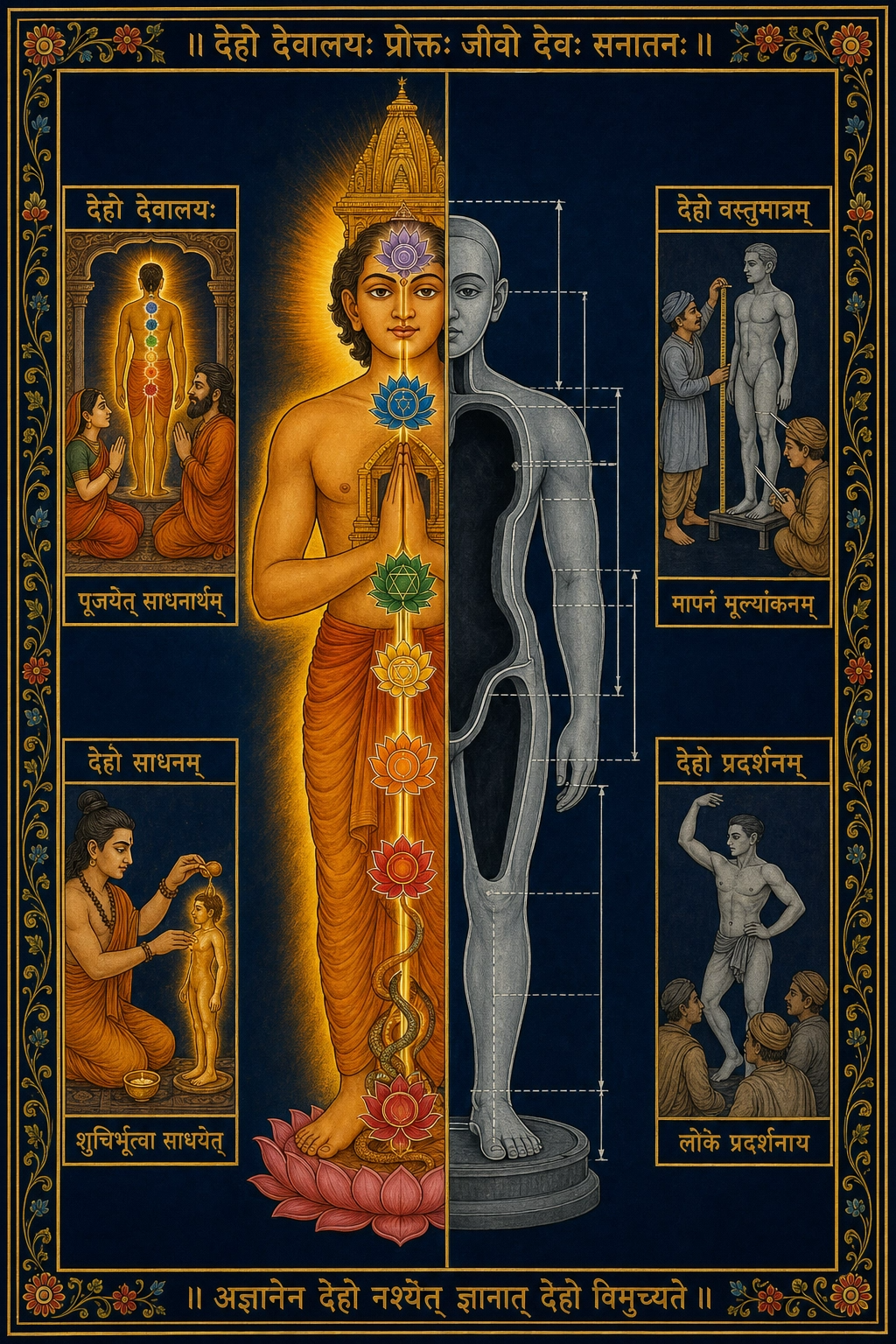

The body is not a project to be perfected, nor a battleground to be won. It is the living, breathing, sacred vessel of your deepest truth, a temple that has been systematically desecrated by a culture obsessed with control and external validation. Reclaiming your body means dismantling the pervasive lie that it is anything less than divine, and remembering the inherent sanctity that was never truly lost. This article will expose the mechanisms of de-sacralisation and guide you back to the profound wisdom held within your own flesh and bone.
What if everything you’ve been taught about your body, about its purpose, its value, and its inherent flaws, was a carefully constructed illusion designed to keep you perpetually striving, perpetually inadequate? What if the relentless pursuit of physical perfection, the endless cycle of diets, workouts, and self-improvement regimes, is not a path to liberation but a sophisticated form of imprisonment? This is not about self-acceptance in the fluffy, feel-good sense. This is about recognizing the profound violence enacted upon the feminine principle when the body is reduced from a sacred dwelling to an object to be conquered, controlled, and constantly corrected.
For millennia, across diverse spiritual traditions, the body was revered as a microcosm of the cosmos, a direct manifestation of the divine. It was understood as a temple, a sanctuary where spirit and matter intertwined, where the dance of creation unfolded. But somewhere along the way, a profound rupture occurred. The body ceased to be a temple and became an object. It became something separate from the self, something to be managed, disciplined, and ultimately, transcended. This de-sacralisation of the body is not an accident; it is a foundational pillar of a patriarchal worldview that fears the untamed, intuitive wisdom of the flesh.
This shift wasn't a gentle evolution; it was a violent re-framing. The body, particularly the female body, was deemed inherently problematic, a source of temptation, sin, and weakness. This narrative, deeply embedded in many religious and cultural doctrines, stripped the body of its intrinsic holiness, recasting it as a vessel for shame and a target for control. The natural rhythms, cycles, and sensations of the body were pathologized, pushing you further away from your own innate wisdom.
This de-sacralisation is not merely a historical footnote; it actively shapes your present reality. Every time you internalize a message that your body is not enough, that it needs to be smaller, firmer, smoother, or different in any way, you are participating in this ancient wound. You are accepting the premise that your physical form is inherently flawed and requires constant correction. This constant striving creates a perpetual state of dissatisfaction, severing your connection to the profound peace that resides in simply *being* in your body.
Consider the subtle yet pervasive ways this objectification manifests. From the moment you are born, you are bombarded with images and narratives that dictate what a 'good' or 'acceptable' body looks like. This external programming creates a deep-seated belief that your body is a project, something to be worked on, rather than a sacred dwelling to be inhabited. This constant external validation-seeking pulls you away from your internal compass, leaving you adrift in a sea of societal expectations.
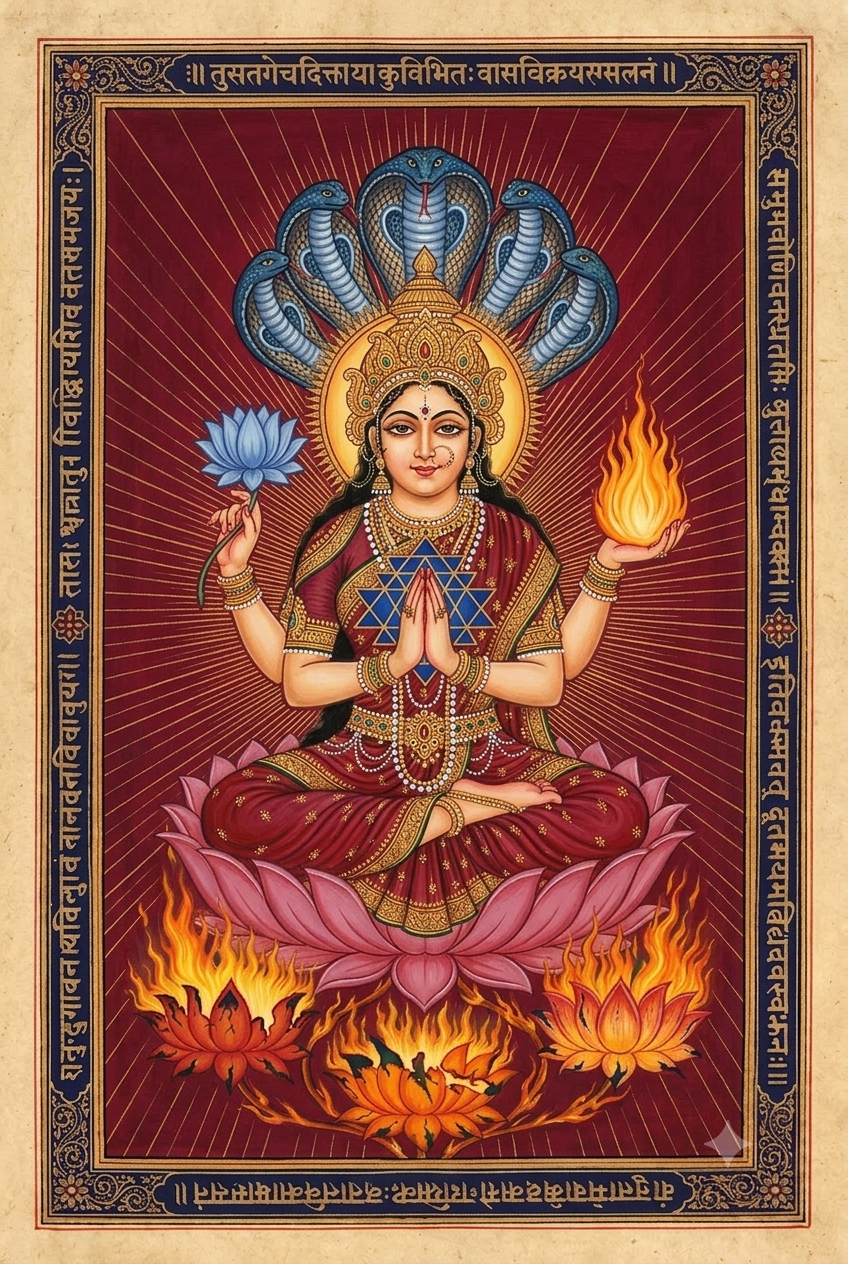
The true tragedy of this objectification is the loss of Shakti – the divine feminine creative power that animates all of existence, and particularly expresses through the physical form. When the body is reduced to an object, its inherent creative intelligence is suppressed. You lose access to the intuitive wisdom, the raw vitality, and the ecstatic potential that is your birthright. Reclaiming your body is therefore a reclamation of this potent, untamed Shakti within you, a remembering of your own divine nature.
The impulse to conquer the body manifests in myriad ways, from extreme ascetic practices aimed at denying the flesh to the modern obsession with aesthetic perfection. Both, at their core, share a common thread: a deep distrust of the body's natural state. In the pursuit of spiritual purity or societal approval, the body becomes a battleground. You starve it, push it to its limits, reshape it, and adorn it, all in an attempt to force it into an ideal that is external to its true nature.
Consider the relentless pressure to conform to ever-shifting beauty standards. This isn't merely about vanity; it's a profound spiritual wound. When your worth is tied to your appearance, your body becomes a performance, an external projection designed to elicit approval. This constant external gaze pulls you away from the internal landscape, severing the vital connection to your own felt experience. The body, once a source of inner knowing, becomes a source of anxiety and self-criticism.
This constant striving for an external ideal creates a profound disconnect from your own inner landscape. You become a stranger in your own skin, constantly evaluating and judging your physical form against an impossible standard. This is not freedom; it is a subtle, insidious form of bondage. The true liberation lies not in achieving a perfect body, but in dismantling the very notion that perfection is required for your worthiness or spiritual awakening.
Consider the subtle ways this manifests in your daily life. Do you find yourself constantly comparing your body to others? Do you feel a sense of shame or inadequacy when you don't meet certain physical benchmarks? These feelings are not inherent; they are learned responses to a culture that profits from your self-doubt. To reclaim your body is to consciously disengage from this external validation loop and to cultivate a radical acceptance of your physical form, not as a means to an end, but as an end in itself.
This illusion of control extends beyond mere aesthetics. It infiltrates how you relate to your body's natural processes. Hunger, fatigue, pleasure, pain – these are not inconveniences to be suppressed or ignored, but vital messages from your inner wisdom. When you override these signals in pursuit of an external ideal, you silence the very voice that guides you towards balance and well-being. Reclaiming your body means re-establishing a deep, respectful dialogue with its innate intelligence, honoring its rhythms and needs without judgment.
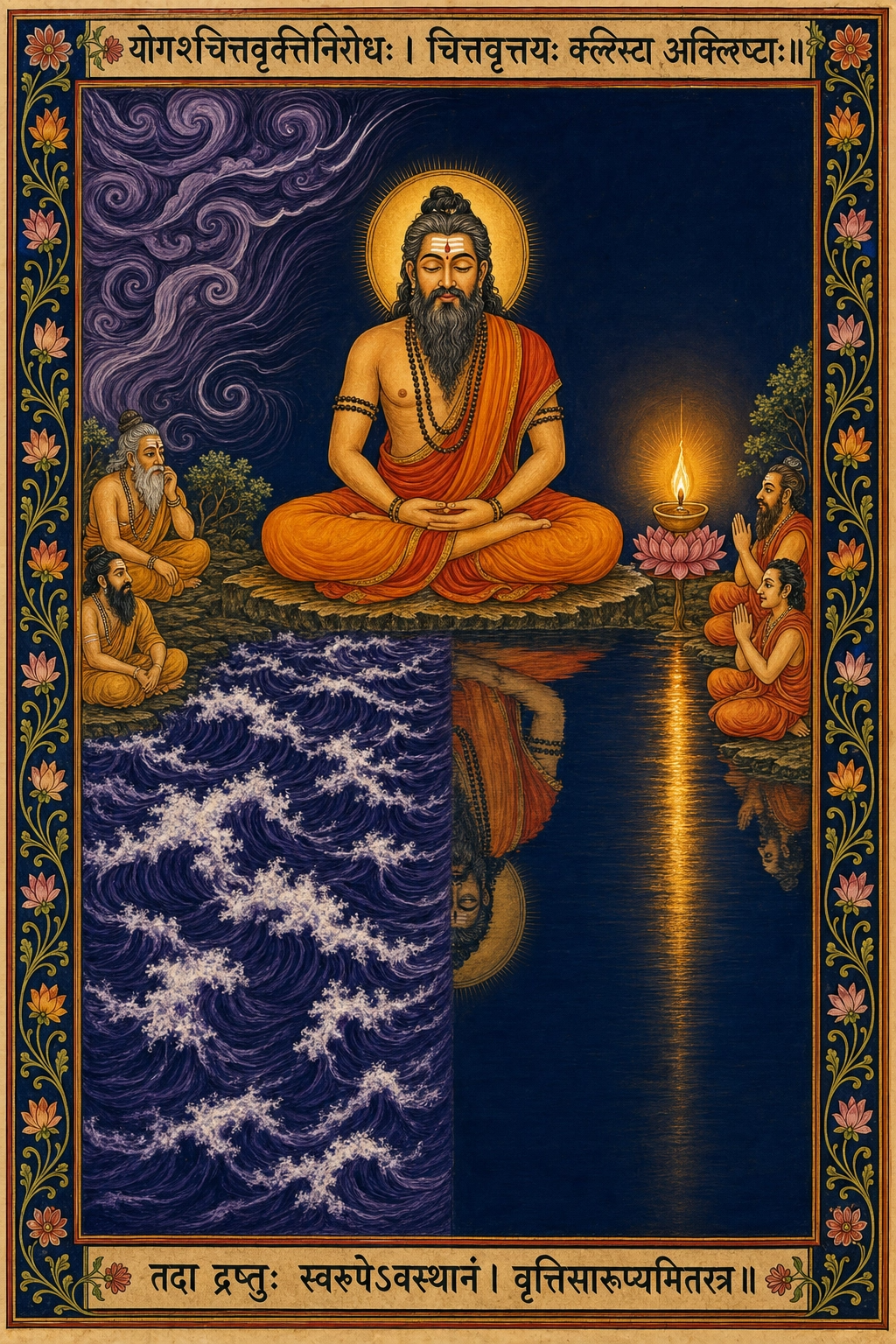
Even in spaces ostensibly dedicated to spiritual growth, this de-sacralisation persists. Modern Western yoga, for instance, has largely been co-opted by this objectifying gaze. What was once a profound system for union, for yoking the individual consciousness with the universal, has often been reduced to a series of physical postures performed for fitness or aesthetic appeal. The emphasis shifts from internal experience to external form, from the subtle energetic body to the visible physical body.
Countless women enter yoga studios, not seeking liberation, but seeking a better body. They contort themselves into impossible shapes, driven by an unspoken competition, measuring their progress by how closely they resemble the images they see on social media. This is not the reclamation of yoga; this is the perpetuation of the very wound yoga was designed to heal. When the practice becomes about how you look, rather than how you feel, or more accurately, how you *are*, the body remains an object to be judged and perfected, rather than a temple to be honored. This is the insidious trap of when yoga became about how you look.
This commodification of yoga, where poses are perfected for Instagram rather than for internal resonance, is a profound betrayal of its original intent. The ancient yogis understood that the physical postures, or asanas, were merely a preparation for deeper states of meditation and self-realization. They were tools to purify the body and steady the mind, not ends in themselves. When you prioritize external form over internal experience, you miss the entire point of the practice, reducing a sacred technology to a mere physical exercise.
Think about the subtle ways this external focus infiltrates your own practice. Do you find yourself pushing past your body's natural limits to achieve a certain pose, even when it causes discomfort or pain? Do you compare your flexibility or strength to others in the room, feeling a sense of inadequacy if you don't measure up? These are indicators that the external gaze has taken root, pulling you away from the authentic, internal experience of yoga. True yoga invites you to listen to your body, to honor its wisdom, and to move with a fierce compassion that prioritizes your well-being over any external ideal.
The true dharma of yoga – its inherent purpose and truth – is to facilitate union, to bring you into a state of profound connection with your deepest self and with the divine. When the practice becomes a performance, this dharma is obscured. The body, instead of being a vehicle for spiritual awakening, becomes another arena for egoic striving. Reclaiming yoga means stripping away these layers of external expectation and returning to the radical simplicity of being present in your body, allowing the practice to unfold from a place of deep inner listening and reverence.
The true path of yoga, of Tantra, turns inward. It is a radical act of turning your awareness back toward yourself, of listening to the subtle whispers of your own being. It is about cultivating an internal gaze that perceives the inherent divinity within, rather than an external gaze that constantly evaluates and critiques. This internal gaze is not passive; it is an active, fierce compassion that recognizes the body as a living, breathing expression of Shakti, the divine feminine creative power.
This is a fundamental departure from the prevailing cultural narrative. The world tells you to fix your body, to improve it, to make it more palatable. The path of reclamation invites you to listen to it, to trust its wisdom, and to allow it to guide you. It is a radical act of self-sovereignty to reclaim your body from the endless projections and expectations of a culture that profits from your insecurity.
This internal gaze is not about ignoring the external world, but about prioritizing your inner experience as the ultimate arbiter of truth. It is about cultivating a deep sense of self-trust, knowing that your body holds an innate wisdom that is far more profound than any external authority. This is the essence of svatantrya, the absolute freedom and independence that arises when you are attuned to your true nature. When you practice this internal gaze, you begin to dissolve the illusion of separation between your body and your spirit, recognizing them as two inseparable aspects of your divine being.
Consider the profound implications of this shift. When you operate from an internal gaze, your actions are no longer dictated by fear of judgment or the desire for approval. Instead, they arise from a place of deep authenticity and self-reverence. This is not selfishness; it is a radical act of self-love that ripples outward, influencing all your relationships and interactions. You become a beacon of embodied truth, inspiring others to reclaim their own internal authority.
The cultivation of this internal gaze requires consistent practice and a fierce commitment to self-inquiry. It means pausing throughout your day to check in with your body, to feel what is truly present, and to honor its messages without judgment. It means consciously disengaging from the constant barrage of external stimuli that seeks to pull your attention outward. This is a revolutionary act in a world that constantly demands your attention and seeks to define your worth from the outside in. Your body is your most direct access point to the sacred, and the internal gaze is the key to unlocking its profound wisdom.
The de-sacralisation of the body is inextricably linked to the de-sacralisation of the Earth. When you disconnect from your own physical form, you simultaneously disconnect from the living, breathing intelligence of the planet. Both are seen as resources to be exploited, controlled, and dominated. Reclaiming your body is therefore an act of ecological restoration, a return to an earth-centred practice that recognizes the interconnectedness of all life.
Your body is not just a biological machine; it is a portal to deeper truths, a direct connection to the elemental forces of creation. It holds ancestral wisdom, cosmic intelligence, and the raw, untamed power of nature. To deny this is to deny a fundamental aspect of your being. To embrace it is to unlock a profound source of strength and intuition.
This connection to the Earth through your body is not merely symbolic; it is a tangible, energetic reality. Your physical form is composed of the same elements as the Earth – the solidity of bone, the fluidity of blood, the fire of metabolism, the breath of air, the spaciousness of consciousness. When you honor your body, you honor the Earth. When you desecrate your body, you participate in the desecration of the planet. This understanding forms the bedrock of an earth-centred practice, where personal healing and planetary healing become one and the same.
Consider the profound wisdom held within indigenous traditions, where the body was never separated from the land. The Earth was seen as the Great Mother, and the human body as a direct extension of her creative power. This perspective stands in stark contrast to the modern worldview that positions humanity as separate from and superior to nature. Reclaiming your body is a return to this ancient wisdom, a remembering that you are not merely *on* the Earth, but you *are* the Earth, in miniature, a living, breathing expression of its sacred intelligence.
This reclamation calls for a radical re-evaluation of your relationship with the natural world. It invites you to spend time in nature, not as an escape, but as a homecoming. To feel the earth beneath your feet, the sun on your skin, the wind in your hair – these are not just pleasant sensations; they are profound acts of reconnection. They remind you that your body is not an isolated entity, but an integral part of a vast, interconnected web of life. This embodied connection to the Earth becomes a wellspring of resilience, intuition, and profound peace.
Sit for a moment. Close your eyes. Bring your awareness to your solar plexus, the space just above your navel. There may be a subtle hum here, the energetic center of your personal power, your will, your sense of self. There may be tension, a holding, an old story lodged in this place. Let your breath move into your solar plexus and rest there, and let the truth of your own inherent divinity press against the inside of that space. This is where your deepest knowing resides, often obscured by the noise of external demands.
This is not about intellectual understanding; it is about felt experience. Your body speaks a language far older and more profound than words. When you learn to listen, you begin to unravel the conditioning that has taught you to distrust your own flesh. The solar plexus, as the seat of your personal power, is a vital point for reclaiming your sovereignty, for asserting your right to exist fully and unapologetically in your own skin.
This act of bringing awareness to your solar plexus is a direct engagement with your Manipura Chakra, the energy center associated with personal power, will, and self-esteem. When this chakra is balanced and vibrant, you experience a strong sense of self, inner drive, and the ability to act decisively. Conversely, when it is blocked or suppressed, you may feel powerless, insecure, or unable to assert your boundaries. By consciously directing your attention here, you are actively revitalizing this crucial energy center, strengthening your inner core.
This practice of returning to the felt body is a powerful antidote to the external noise and constant demands that seek to pull you away from your center. In a world that constantly tells you who to be and what to do, returning to the felt sense of your solar plexus allows you to reconnect with your authentic self, your true desires, and your inherent wisdom. It is a practice of radical self-trust, where you learn to discern between external conditioning and the genuine impulses arising from your deepest being. This internal compass, once re-calibrated, becomes your most reliable guide.
Furthermore, the solar plexus is intimately connected to your digestive system, both physically and energetically. Just as your body processes food, your Manipura Chakra processes experiences and emotions. When you hold tension or unexpressed emotions in this area, it can show up as physical discomfort or a sense of being 'stuck'. By consciously engaging with this center, you not only reclaim your personal power but also facilitate the healthy processing and release of emotional blockages, allowing for a greater flow of vital energy throughout your being.
The modern wellness industry, while seemingly promoting self-care, often inadvertently perpetuates the objectification of the body. Self-care routines can become another set of tasks to perform, another set of external validations to seek. The body becomes a project to be managed, rather than a sacred vessel to be honored. This is the subtle but significant difference between genuine reverence and commodified self-improvement.
True reclamation moves beyond the superficiality of from cosmic power to self care. It is not about treating your body better so it can perform better for the world. It is about recognizing that your body *is* the cosmic power, a direct manifestation of the divine. It is about understanding that your inherent worth is not contingent on its appearance, its capabilities, or its adherence to any external standard. This is a radical shift from viewing the body as a commodity to recognizing it as a source of infinite wisdom and power.
True reclamation asks you to question the very premise of 'self-care' as it is often presented. Is it truly about nurturing your being, or is it another subtle way to keep you striving for an external ideal? When self-care becomes a checklist of activities designed to optimize your appearance or productivity, it reinforces the idea that your worth is tied to your performance. This is not liberation; it is a more palatable form of the same old conditioning. Authentic self-reverence arises from a deep knowing of your inherent worth, independent of any external practice or outcome.
Consider the subtle ways the wellness industry can co-opt your desire for healing and turn it into another form of consumption. You are told you need specific products, diets, or routines to achieve a state of well-being. While some tools can be supportive, the underlying message often implies that you are incomplete or broken without them. This creates a dependency on external solutions, rather than fostering your innate capacity for self-healing and self-regulation. Reclaiming your body means trusting your own inner guidance, discerning what truly nourishes you, and releasing the need for external validation or prescribed formulas.
This shift from commodity to cosmic power is a profound act of spiritual rebellion. It is a refusal to allow your body, your most sacred possession, to be reduced to a market good or a project for endless improvement. It is a declaration that your physical form is a direct expression of the divine, a living altar where spirit and matter meet. When you embody this truth, you not only reclaim your personal power but also contribute to the collective awakening, reminding humanity of its inherent sacredness and its deep connection to the cosmos. This is the essence of Prakriti, the primordial creative force, manifesting as your unique, divine form.
The reclamation of the body is a revolutionary act. It is a dismantling of centuries of conditioning that has sought to separate you from your own innate wisdom. It is a return to a state of embodied sovereignty, where your body is not something you *have*, but something you *are*. This is not a passive acceptance; it is an active, fierce embrace of your own divine nature.
This revolution begins within. It begins with the conscious choice to turn inward, to listen, to feel, and to trust the profound intelligence of your own flesh. It is the slow work of undoing, of shedding the layers of external programming that have obscured your inherent radiance. When you reclaim your body as a temple, you reclaim your power, your intuition, and your direct connection to the sacred.
In the Sovereign Revolution framework, the body as a temple signifies its inherent sacredness and its role as a direct manifestation of the divine. It is not merely a physical vessel, but a living, breathing expression of cosmic intelligence and a portal to deeper spiritual truths. This perspective stands in stark contrast to viewing the body as an object to be controlled or perfected.
Within the Sovereign Revolution, we understand that modern culture has de-sacralised the body by reducing it to an object of aesthetic pursuit, a project for constant improvement, or a source of shame. This shift, often driven by patriarchal narratives and consumerism, severs the intrinsic connection between the body and spirit, fostering a deep distrust of its natural wisdom and rhythms.
The Sovereign Revolution holds that when yoga becomes primarily about physical postures, flexibility, or achieving a certain aesthetic, it inadvertently participates in the objectification of the body. This moves away from yoga's original purpose as a technology for union and inner awakening, turning the practice into another arena for external validation and performance.
Here, we understand that reclaiming your body as sacred begins with an internal shift in perception. It involves consciously disengaging from external pressures and cultivating an internal gaze that listens to and trusts the body's innate wisdom. This is a process of undoing conditioning and recognizing the profound divinity already present within your physical form.
The Sovereign Revolution position is that while self-love and body positivity are valuable, the reclamation of the body goes deeper. It's not just about accepting or loving your body as it is, but recognizing its inherent, non-negotiable sacredness as a manifestation of divine energy. It's a fierce embrace of embodied sovereignty, moving beyond superficial affirmations to a profound reverence.
The Sovereign Revolution holds that you begin not with grand declarations but with attention — bringing your awareness back into the body you were taught to manage from the outside. Each time you notice a sensation without rushing to fix or judge it, you withdraw your consent from the de-sacralising gaze. Reverence is rebuilt in these small returns, until the body stops being an object you monitor and becomes again the temple you inhabit.
Angela Brisbane is a mystic and tantric teacher with 30+ years of practice and transmission in Kundalini Yoga and Non-Dual Tantra. She is the founder of Shakti Blooming — The Sovereign Revolution.
Brisbane, Angela. "De-sacralisation: How the Body Went From Temple to Object to Be Conquered." Shakti Blooming — The Sovereign Revolution. shaktiblooming.com. 2026.